
Master key locks
Master key locks are a strategic solution for hierarchical access management in industrial, plant and professional environments. Ideal for centralized locking systems on technical furniture, electrical cabinets, office furniture or contract facilities, they allow selective opening using individual keys and passkeys. Available with plate-cylinder or pin tumbler mechanisms, in configurations with single keyed alike (KA), mixed keyed alike (KD) or master key system (MK, GMK), they can be integrated on hinged doors, drawers, shutters and flaps. Wide variety of materials (brass, stainless steel, technopolymer), finishes (chrome-plated, nickel-plated, black) and attachment modes (screw, nut, horseshoe clip) to suit every design requirement.
Master key locks are very special products, and to get a clear picture of their functionality and especially their usefulness, it is essential to clarify that they should not be considered individually, but always as part of a coordinated lock complex.
We are accustomed to the idea that each individual lock corresponds to a key, which is the one and only key that can enable it to be opened and locked.
It is indeed so: if one buys a quality lock this will not be able to be opened with any other key than one’s own, even within models that are identical to each other, however by analyzing lock complexes different solutions can be recreated.
Imagining all the locks in a building, one can arrange for a single type of key to open all the rooms thus serving as a genuine passkey; similarly, one can choose for one key to open all the locks on a floor, or in a department, one can provide a unique key that opens not only doors, but also furniture, display cases and whatever else is present, and so on.
The usefulness of master key locks must therefore be understood from a hierarchical perspective, the organization of which, of course, must be chosen and structured at the design stage.
The different hierarchical solutions that can be recreated, which in technical jargon are referred to as a training system, can specifically address a variety of needs that can be applied in a variety of contexts: discover the different trained systems on the relevant page.
(Drawing KA)
This trained system is the simplest and provides that a single key can be used on cylinders related to different objects.
A system such as this can be adopted, for example, by a store, where the sales clerk can use the same key to open display windows, furniture drawers, the door to the storeroom, and whatever else is inside the business premises.
(Drawing MK)
This type of trained system involves a key that can open all elements of the structure and also additional, hierarchically lower keys that can open only the locks associated with them.
The most typical example of this system is in a hotel: each customer is given a key that allows access only and only to his or her room, at the same time the facility staff has pass keys with which they can access all rooms and also other spaces in the building, such as garages or storage areas.
(Drawing CC)
This particular trained system has a purely temporary utility: it provides a passkey that allows all doors in a building to be opened; however, users can later disable the effectiveness of this key by making only the specific key active.
The passkey in this system is often referred to in technical jargon as a site key, precisely because it is expected very often in such contexts.
In a construction site, thus in a building whose construction is being completed, it is common to choose to provide a key that allows access to all housing units in order to make it easier for the various installers to work; when the work is completely finished, thus when the owners take possession of their housing units, they can disable the “construction site” key, making only the personal one active.
(Drawing CM)
This trained system referred to as the “central cylinder” system provides a single key to allow access to common areas and individual keys for private rooms.
The most typical example of this hierarchical structure is that of a residence: unit owners have a key that allows them free access to all common areas, such as may be garages, fitness centers, and study rooms; the same key, however, does not in any way allow access into private areas, i.e., other people’s apartments.
(CMK drawing)
This system does not concern a single building, but rather complexes of buildings: although each of them has an autonomous system, in fact, a passkey is still provided to allow those in possession of it to freely access all the common areas of these facilities.
Such a trained system can be an ideal solution for workers who have to perform specific professional tasks within these buildings, such as may be cleaners, sanitizers, maintenance workers, vending machine replenishers and more.
(GMK drawing)
This trained system is among the most hierarchically articulated and is typical of corporate settings, to be understood of course as large and highly structured enterprises.
At the top of the hierarchy are managers, who are provided with keys that allow them to gain access to any area of the company; in the lower ranks, however, are employees in senior roles, such as department heads and team leaders, who are provided with keys that allow them to gain access to all areas of the relevant department.
The third and final level, on the other hand, is the “basic” level, i.e., that of the simple employee, to whom the company provides a key that gives him or her access exclusively at the environment in which he or she performs his or her professional work, whether it is an office or an area of a different type.
(Drawing GGMK)
This system has a conceptually similar structure to that illustrated in the previous section, but it has 4 levels rather than 3.
In this trained system, the hotel is also a very fitting example, imagining on the first level, the highest level, the manager of the facility, who is in possession of keys that enable him to open any door in the building.
At the second hierarchical level is the floor manager, to whom management assigns keys that allow him or her to open all doors on his or her floor, but not those on other floors.
On the third level, however, we find workers, usually cleaners or maintenance workers, who are given keys that allow them access only to the rooms they have been assigned.
On the fourth and final level, however, are the customers, who are given a key that allows them to open their own room and only their own room.
The possible solutions, as seen, are many, and OMR Locks is able to make trained systems suitable for any context and customizable in every detail.
Filtra i prodotti
Showing 1–30 of 69 results
-

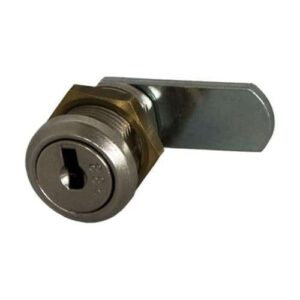
Universal Plate-Cylinder Cam Lock
1,00€ -
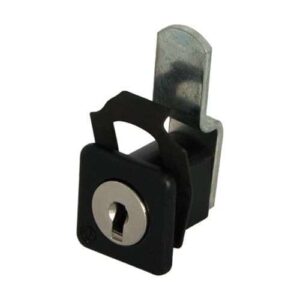
Mailbox cam lock
-
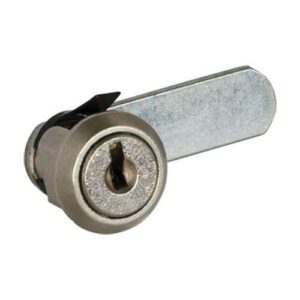
Universal cam lock quick fastening
-
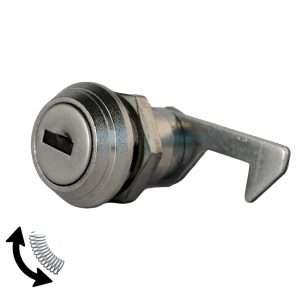
Latch lock with return spring and hook cams
-
Universal Plate-cylinder Cam Lock Ø 19
-
Universal Cam Lock
-
Universal cam lock Ø 18
-
Mini plate-cylinder camlock
-
Universal square head lock
-
Universal Stainless Steel Barrels Cam Lock
-
Rim Cam Lock with Dust Shutter and Horseshoe Clip Fixing
-
Universal lock with dust shutter and nut
-
Universal cam lock with square jig
-
Microhandle with lock
-
Cam lock with double flange for screw fixing
-
Cam lock with oversize head
-
Mailbox cam locks Ø 16 and Ø 18 mm
-
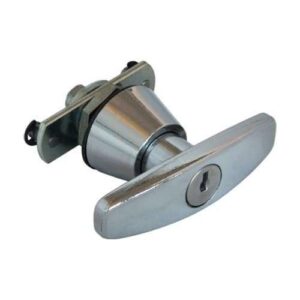
T-handle with lock, chrome finish
-
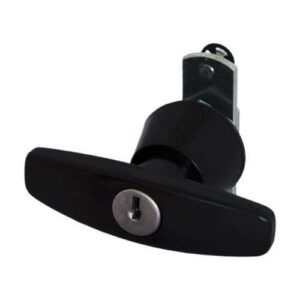
T-handle with lock, black
-
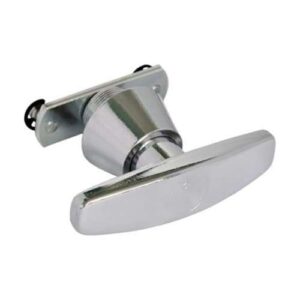
T-handle, chrome finish
-
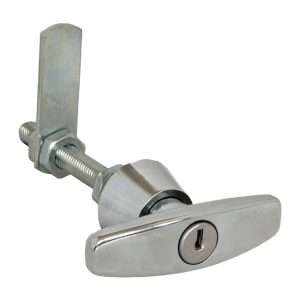
Adjustable T-handle with lock
-
Black adjustable T-handle with lock
-
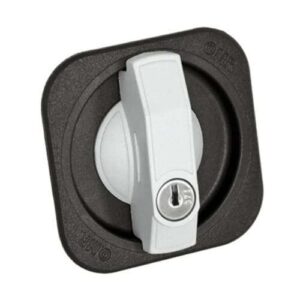
Square base handle
-
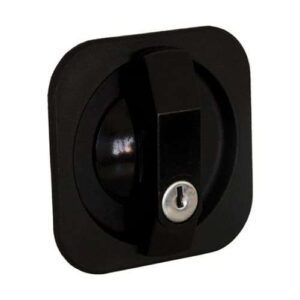
Black square base handle
-
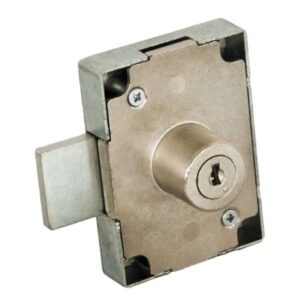
Single-point dead bolt lock
0,00€ -
3-point deadbolt lock
-
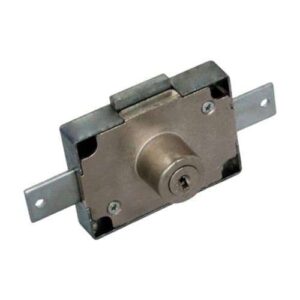
2-point plate-cylinder espagnolettes
-
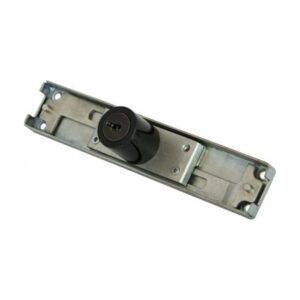
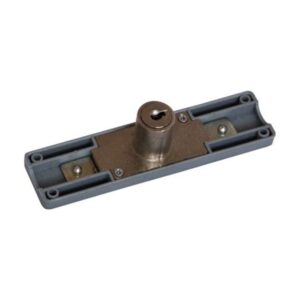
Plastic plate-cylinder 2-point cremone bolts
0,00€ -
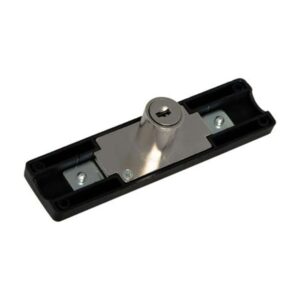
Black plastic 2-point plate-cylinder cremone bolts
0,00€ -
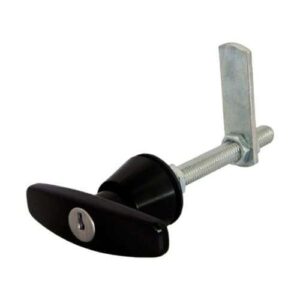
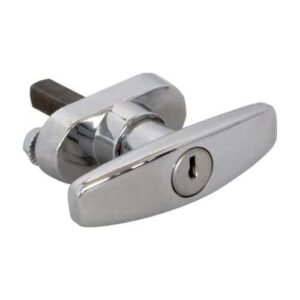
T-handle with lock
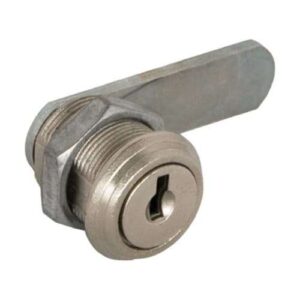
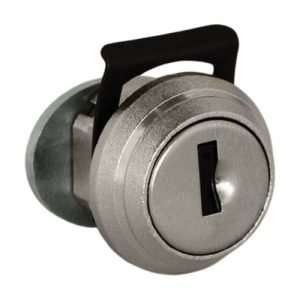
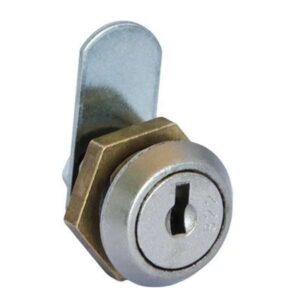
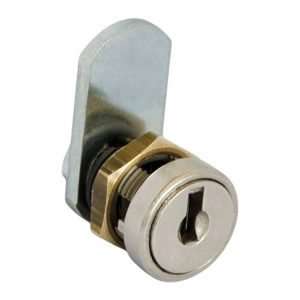

FOCUS
FAQ
What are master key locks used for in industrial settings?
Master key locks enable the creation of hierarchical access systems within industrial plants, technical offices or complex facilities. They allow selective opening of different compartments through individual keys and global access through a master key, optimizing security and logistics management.
What is the difference between keyed alike (KA), keyed alike (KD) and master key system?
Keyed alike (KA) allows all locks to be opened by the same key. Keyed different (KD) provides different keys for each lock. The master key system combines both: each lock has its own dedicated key, but can also be opened by a higher master key.
What materials are best for master key locks in harsh environments?
In harsh or high-wear environments, locks made of stainless steel or high-strength technopolymer are recommended. These materials ensure durability, corrosion resistance, and reliable performance even in harsh environmental conditions.