
Microlocks
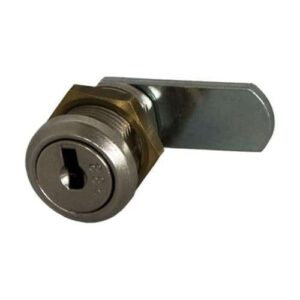
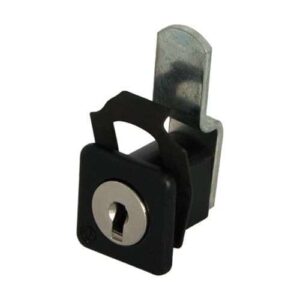
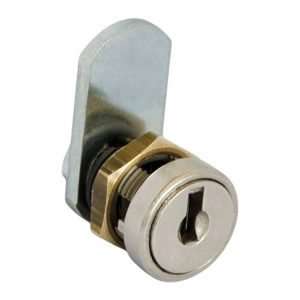
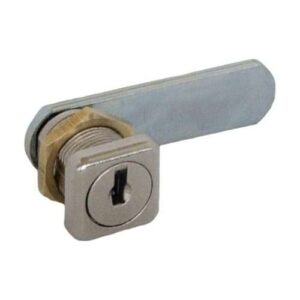
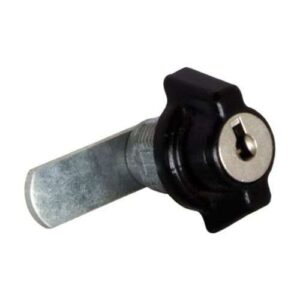
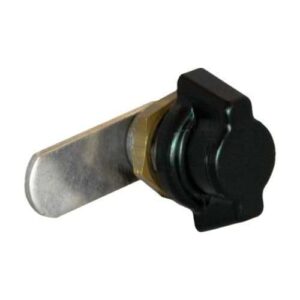
OMR micro-locks are small-sized precision locks designed for limited-space applications in industrial and professional settings. Ideal for switchboards, watertight switchboards, operator panels and technical furniture, they offer high reliability in a compact format. Available with standard bore diameters (13, 15 and 16 mm), wafer tumbler mechanisms or free rotor and flat keys, they provide security and versatility. Variants include straight, cranked and hook cams, with nut, horseshoe clip or quick release system. Nickel-plated or black finish with nickel-plated barrels ensures strength and aesthetic integration in locking systems for industrial furniture.
As can be guessed from their name, micro-locks are very small locks, which nevertheless do not differ from larger models either in reliability or in operation: they are in fact common diameter cam locks.
Micro-locks, also known as mini-locks, come in many variants that can be distinguished on the basis of several parameters: diameter, which can be 10.0 mm or less; length, which is to be understood as the space included from the bottom of the head to the point where the cam is attached; and shape and type of key.
Such small dimensions make microswitches an optimal choice for all applications involving installation on very limited space, such as is the case with switches and microswitches, key selectors, handles, watertight switchboards, operator panels for machine tools, elevator components, HMI systems, or control panels.
OMR Locks takes very strict care of these items, well aware of the fact that in a variety of applications it is essential to minimize overall dimensions, and is able to meet customer needs under the banner of customization and maximum precision.
Filtra i prodotti
FOCUS
FAQ
In what areas are OMR micro-locks used?
Micro-locks are used in many industrial and professional fields where secure but compact locking is required: electrical panels, HMI panels, watertight switchboards, technical furniture, automation and elevator components.
What is the difference between plate-cylinder and free rotor mechanisms?
Microserrators with plate-cylinder mechanisms offer more secure and customizable encryption, while free-rotor microserrators are simpler and suitable for less critical applications or where smooth rotation without internal mechanical resistance is required.
How to choose the most suitable type of fixing?
Nut fastening is most common for standard installations on metal panels; horseshoe clips are suitable for quick mounts on plastic or thin materials; quick fastening allows efficient installation in series or on modular furniture, reducing assembly time.