
Cam locks
Cam locks, also known as cam locks, are among the most popular locking systems for technical furniture, cabinets, metal cabinets, and drawers. Thanks to their compact design and simple operation, these locks are a reliable and economical solution for locking doors, panels and technical compartments in many professional settings.
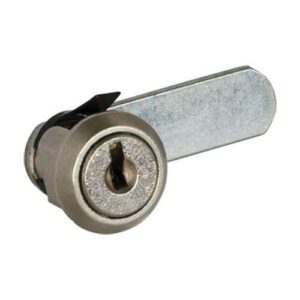
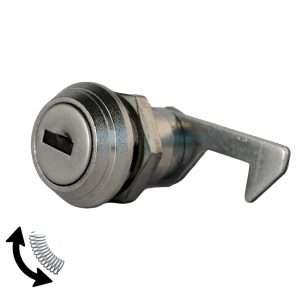
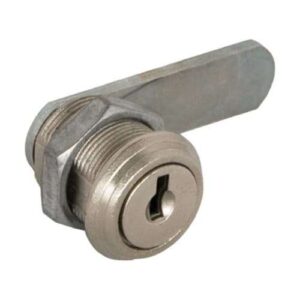
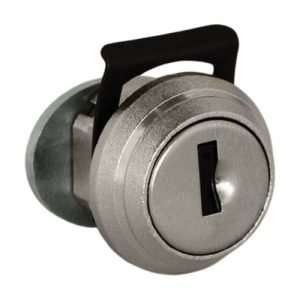
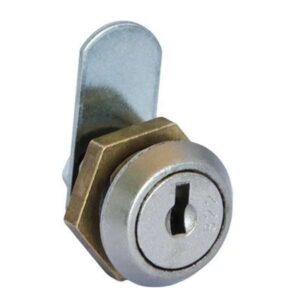
A rotary cam lock consists of a cylindrical body that passes through the panel and a rear metal cam that rotates to lock or release the door. For this reason, these solutions are also often identified as cylindrical cam locks, cylindrical cam locks, or rotary cam locks. The principle of operation is simple but extremely effective: by turning the key, the rear cam moves and allows the cabinet to be opened or closed.
What is a Cam Lock?
Cylindrical furniture locks find application in many areas of technical and industrial furniture. They are used as locks for cabinets, locks for metal cabinets, and locks for drawers, as well as for mailboxes, machine panels, electrical panels, and technical equipment. In many catalogs the lock body is also referred to as a furniture cylinder, a term that identifies the cylindrical part installed in the panel.
Within the category are numerous variations of furniture cam locks, designed to suit different installation and security needs. The most common are keyed cam locks, used when access to compartments must be controlled. Alongside these are tubular cam locks, often used in vending machines and technical equipment, and keyless cam locks, used when locking must be quick and convenient.
Another difference is the angle of rotation of the lock. Depending on the model and cam configuration, you can choose quarter-turn (90°) or half-turn (180°) locks. This feature allows locking to be adapted to the geometry of the cabinet and the type of door or drawer rebate.
Advantages and Main Features
Cam locks are distinguished by several features that make them the standard choice in the industry:
Mechanical simplicity and reliability
Few moving parts means minimal maintenance and low risk of jamming. Ideal for high-frequency use environments such as locker rooms and offices.
Compactness and small footprint
Perfect for limited space and thin panels, without compromising aesthetics or functionality.
Quick installation
Mounting on standard round hole without special tools. Replacement in minutes.
Versatility of accessories
Thanks to their mechanical simplicity and the wide variety of accessories available, furniture cam locks are an extremely versatile solution. By changing the back cam or actuator, the same cylinder can be used to lock metal cabinets, tool boxes, technical cabinets or centrally locking drawer cabinets. In addition, it is possible to add handles, dust cover flaps, stainless covers, etc.
Low Cost and Low Maintenance
Excellent relationship between price, reliability and durability.
Adaptability to Materials
They work on metal, wood, and plastic without the need for structural modifications.
Available variants
By type of mechanism
Plate-cylinder: standard, economical applications
Pin tumblers: greater strength, professional environment
For Angle of Rotation
Quarter turn (90°): limited space, standard drawers
Half-turn (180°): compartments with greater thicknesses, robust blocking
By key type
Standard wrench
Triangular, square, hexagonal, winged, fiat shape, screwdriver, etc.
Keyless (quick push open)
By Type of Fixing
Standard nut (fine adjustment)
Snap springs (quick installation)
Horseshoe clip (quick and strong anchorage)
Screws or rivets.
By Material
Nickel plated (standard, indoor environments)
INOX 304 (aggressive environments, outdoors, saltiness)
The terminal to which the cam (or cam) anchors is standard
Many locks use a standard end cap (often 8 mm square) that allows different types of cams or actuators to be mounted. You can then choose from straight, cranked, hooked cams, or centrally locking drawer actuators. This modularity allows the same cam lock to be adapted to many configurations of furniture or technical cabinets.
Main Applications
Cam locks are used in so many areas because of their simplicity and compactness:
Technical furniture and professional furnishings
Lockers for lockers in locker rooms, schools, gyms
Condominium mailboxes
Electrical panels and machine panels
Vending machines
Display cases
RV lockers and toolboxes
Metal cabinets and technical cabinets
Industrial carts and containers
Technical equipment and control panels
These locks are chosen when a compact, inexpensive, and easy-to-install locking system is needed.
Why choose a cam lock?
Cam locks represent a standard in technical and industrial furniture: they are easy to install, require little maintenance, and offer excellent value for money, reliability, and durability.
Whether you are looking for a solution for a household drawer box, locks for communal cabinets, locks for sturdy metal cabinets, or cam locks for special applications, you will always find the right configuration for your needs.
Filtra i prodotti
Showing 1–30 of 81 results
-

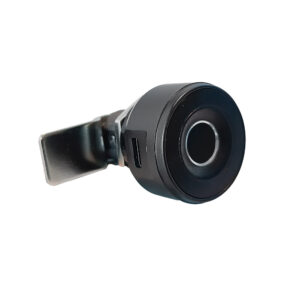
Biometric fingerprint lock – BioLock
-
Budget lock with barrel under spring, quick installation, double barb key
-
Budget lock with barrel under spring, quick installation, screwdriver key
-
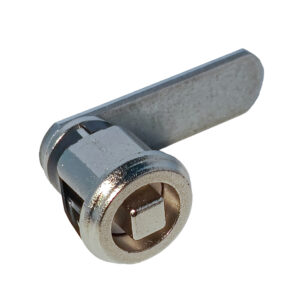
Budget lock with barrel under spring, quick installation, square shape (Q7)
-
Budget lock with barrel under spring, quick installation, triangular T6 shape
-
Budget lock with barrel under spring, quick installation, with handle
-
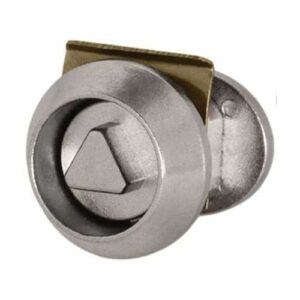
Concealed cam locks for modular panels and platforms
-
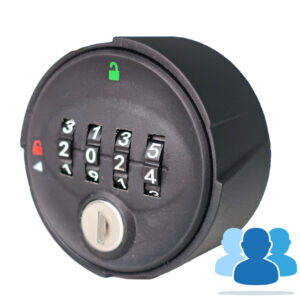
Electronic combination lock
-
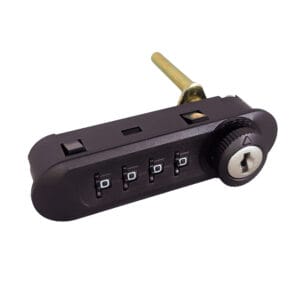
Linear mechanical combination lock with security key
-
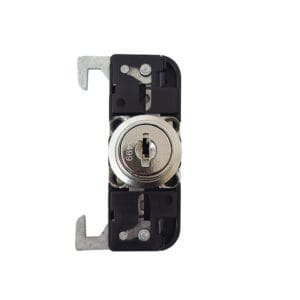
Lock for furniture shutter – key cylinder + side hooks
-
Lock for roller shutters and sliding doors with double spring hooks
-
Manual lock for wastebins – Square 7 key
-
Mechanical combination lock with key – public mode
-
Mechanical combination lock with rear hooked cams
-
Stainless steel double barb – 3 mm Pin budget lock
-
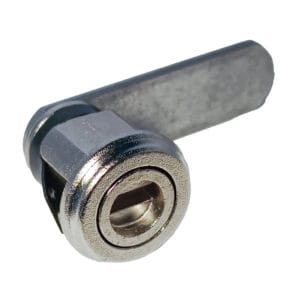
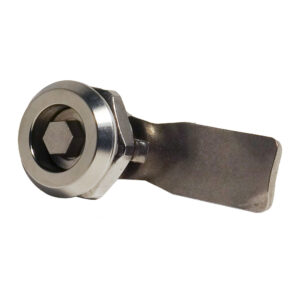
Stainless steel hexagon budget lock
-
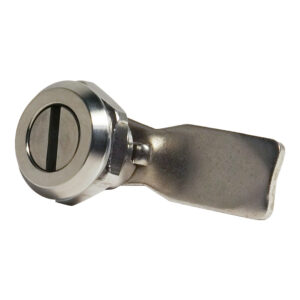
Stainless steel screwdriver budget lock
-
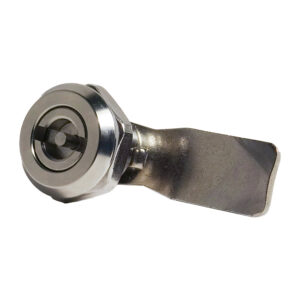
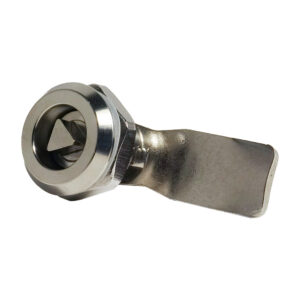
Stainless steel triangle budget key lock
-
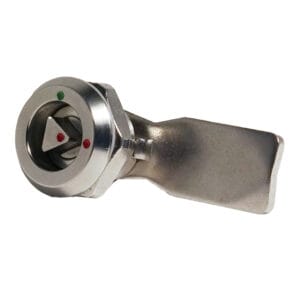
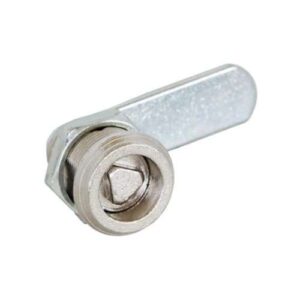
Stainless steel triangle socket key lock – with status indicators
-
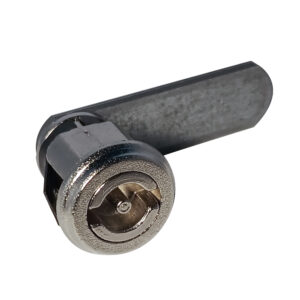
Tool operated camlock – 5 mm Triangle
-
Tool operated slamlock with notched cam
-
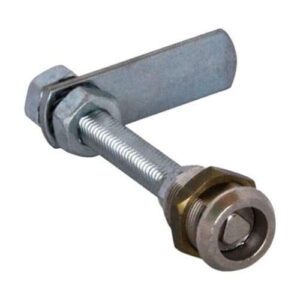
Tool operated cam lock with threaded extension – 6 mm Triangle
-
Tool operated camlock – 6 mm Triangle
-
Universal Plate-Cylinder Cam Lock
1,00€ -
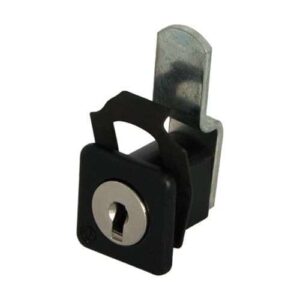
Mailbox cam lock
-
Universal cam lock quick fastening
-
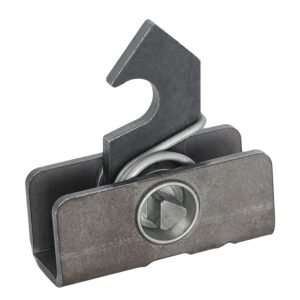
Cam lock with return spring and hook cam (mod. 07)
-
Universal Plate-cylinder Cam Lock Ø 19
-
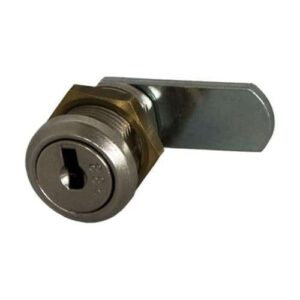
Universal Cam Lock
-
Universal cam lock Ø 18

Approfondimento su: Cam locks
After looking at the products available, here is a practical guide to navigate your choice and find the perfect cam lock for your needs.
1. Measure your thickness: diameter and length
The basic parameters are cylinder diameter and length. These determine whether the lock will fit your cabinet.
Diameter (the main cylinder)
Measure the hole on the surface where you want to install it. The most common diameters range from 16 to 22 mm. Standard sizes are 16 mm, 18 mm, 20 mm, and 22 mm.
Length (panel thickness)
Measure the thickness of the panel, drawer or door where you will mount the lock. The most common lengths are:
- 20-21 mm: clearly dominant, suitable for most standard applications
- 18-22 mm: highly populated area, ideal for cabinets and drawers of various types
- 25-28 mm: second strong group, for thicker compartments and robust applications
Choose a length that matches or slightly exceeds the thickness. Insufficient length = ineffective blocking; excessive length = unnecessary clutter.
Tip: If you replace an old lock, the diameter and length of the current one will give you the correct answer.
2. Choose the type of key according to use.
The shape of the key affects convenience and security. You will find several options in the filters:
Standard wrench
Toothed shape, the most common and economical. Available in reversible (KA) or non-reversible (KD, MK) versions. Perfect for household drawers and school lockers. Simple, reliable, available anywhere.
Budget locks (plug-in)
They offer an intermediate level of security and are ideal for professional applications. Available in triangular, square, screwdriver, fiat and hexagonal shapes. Commonly used in gas and electrical doors, electrical panels, technical panels and technical compartments.
Tip: For home or school settings, the standard notched key is more than sufficient. For high-traffic or sensitive professional environments (electrical panels, plants), choose budget locks.
3. Quarter turn (90°) or half turn (180°)?
The angle of cam rotation determines how much space the cam occupies when it opens.
Quarter-turn lock (90°)
The cam rotates 90 degrees only. Ideal for tight spaces, thin doors, small drawers. Quick and convenient movement. Best choice for most standard cases.
Half-turn (180°) lock
The cam rotates 180 degrees. Ideal for thicker compartments, very strong applications. More decisive and stable locking. Necessary if the compartment is deep or the lock must be "decisive."
Tip: Choose 90° if you have no special requirements. Choose 180° only if the thickness is substantial or the block needs to be maximum.
4. Internal mechanism: plate-cylinder or pin tumbler mechanism?
Not all locks have the same level of internal security. Choose based on the importance of what they protect.
Wafer tumbler mechanism (standard)
Basic structure with internal movable metal plate-cylinders. Security: medium, protection from random access. Cost: low. Ideal for: household drawers, school lockers, light protection.
Pin tumbler mechanism (premium)
Sturdy metal pins, made entirely of brass. Security: high, maximum durability and tamper resistance. Cost: higher but justified by durability. Ideal for: locks to guard valuable goods, critical applications, high-frequency use environments.
Council:
- Plate-cylinder = home and school
- Pivots = when maximum durability and high safety matters
5. Nickel-plated zamak or 304 stainless steel? Where will you mount the lock?
The material determines resistance to oxidation and corrosion over time.
Nickel-plated zamak (standard)
The industry standard. Constructed of zinc-aluminum-magnesium alloy (zamak) with nickel-plated finish. Good resistance in normal environments, with some parts (such as the barrel cover cap) that can be stainless steel for added protection. Ideal for: offices, schools, indoor locker rooms, indoor lockers. Durability: 5-10 years under normal conditions.
INOX 304 (premium-all stainless steel)
Constructed entirely of 304 stainless steel. Very high resistance to salt, moisture, corrosive dust. Ideal for: outdoor installations, maritime environments, professional kitchens, laundries, exposed technical compartments. Durability: 15-20+ years even in harsh conditions.
Quick Tip:
- Nickel-plated Zamak = indoor, protected, dry
- INOX 304 = outdoor, wet, coastal, exposed
6. Fixing system: how will it be anchored?
The cam lock must be fixed to the panel. You will find several anchoring options in the filters:
Standard nut
The most traditional and versatile nut. It is screwed on manually from the back. Allows fine adjustment of thickness. Ideal for: single installations, replacements, retrofits, variety of thicknesses. Tool required: small wrench.
Snap spring
Internal clip that activates upon attachment. Extremely fast installation without tools. Ideal for thin metal cabinets up to just over 1 mm thick: cams snap into the panel and attach automatically, making installation instantaneous. Perfect for: mass assembly, industrial production, thin sheet metal applications.
Horseshoe clip
Fastening with two side arms. Very strong anchorage. Ideal for: heavy metal cabinet locks, industrial applications.
Screws and rivets
Permanent fixing. Maximum strength. Ideal for: outdoor applications, permanent installations that cannot be changed.
Tip: For domestic use or occasional replacements, the standard nut is the classic choice. For industrial assembly in series, snap spring.
7. Rear cam type: what should the cam do?
The cam (back cam) varies in shape to fit the type of lock you need. Remember: thanks to the standard 8 mm square terminal, you can often change it without replacing the lock.
Straight cam
Simple straight cams. Universal use: flush doors, standard drawers. The most versatile choice if you don't know what to choose.
Cam bent (offset)
Cam cranked, not parallel to the body. Ideal for: doors with recesses, furniture with varying thicknesses. Allows locking even when the frame is recessed.
Hook cam
Hook shape. Ideal for: sliding doors, prevents forced lifting. Applications where security against tamper is a priority.
Tip: Choose straight for 90% of cases. If you have specific shape requirements (indentations, sliding), steer your choice toward cranked or hooked.
8. Do you need central locking? Consider actuators
If you have to manage a chest of drawers with multiple drawers (filing cabinet, 4-5 drawer cabinet), actuators (commanders) could make your life easier.
How they work
An internal rod connects the locks of all drawers. A single key unlocks all drawers simultaneously. Reduce keys from "one per drawer" to "one."
Benefits
One key for the entire filing cabinet. Reduces organizational chaos. Improved ergonomics. Thanks to standard 8-mm square terminal, often compatible with standard locks.
When to choose it
Professional 3+ drawer filing cabinets. Archives where practicality is critical. Environments where keys are frequently misplaced.
Tip: If you handle a lot of drawers, the actuator is worth the extra investment for convenience.
9. Final checklist before ordering
Check these parameters:
- ☐ Diameter: measured and verified (16 to 22 mm)
- ☐ Length: corresponds to panel thickness (20-21 mm standard, 18-22 mm or 25-28 mm).
- ☐ Key type: standard toothed (KA/KD/MK) or plug-in (triangular, square, hexagonal, fiat, screwdriver).
- ☐ Rotation angle: 90° (standard) or 180° (robust).
- ☐ Mechanism: plate-cylinders (economical) or pins (maximum safety)
- ☐ Material: nickel-plated zamak (indoor) or INOX 304 (outdoor/hard environment).
- ☐ Fastening: nut (standard), snap spring (thin plate), horseshoe clip (strong)
- ☐ Cam type: straight (standard), cranked (recesses), hooked (sliding)
- ☐ Actuator?: required for central locking (yes/no).
If you have completed this checklist, you have all the information you need to make the right choice!
Do you still have doubts?
If two parameters confuse you (e.g., "I don't know if I need 90° or 180°," "I don't understand the difference between discs and tubulars"), check out the FAQ section below. You will find answers to frequently asked questions.
If you have specific questions about your project, please contact our technical team. We are here to guide you to the perfect cam lock!
Domande frequenti su: Cam locks
How does a cam lock work?
A cam lock consists of three main elements:
- Stator (body): the fixed part anchored to the panel or drawer.
- Barrel (pawl): the part into which the key fits and which rotates to operate the locking mechanism.
- Rear cam: the cam that locks or unlocks door, door or drawer.
Inside the barrels is the locking mechanism, which can be:
- Plate-cylinder, in the most common version;
- pin tumblers, in more advanced versions.
When the correct key is inserted, it aligns the internal elements of the mechanism and allows the barrels to turn. The rotation drags the cam, which releases or blocks the opening of the compartment.
In summary:
- The key enters the pawl
- Internal elements align correctly
- The barrels can rotate
- Cam moves
- The drawer or door opens or closes again
What is the difference between plate-cylinder cam locks and pin tumbler locks?
Plate-cylinder cam locks
- They use internal movable metal plate-cylinders
- They are the most popular solution
- They have a low cost
- They offer good reliability for standard applications
- Ideal for drawers, cabinets and technical furniture
Pin tumbler locks
- They use internal metal pins
- They offer greater precision of the mechanism
- They have high durability even with heavy use
- They are suitable for professional and heavier applications
In general: plate-cylinder cam locks are suitable for most uses, while pin tumbler locks are preferred when more reliability and durability are needed.
What is the difference between 90° and 180° of rotation?
90° (quarter turn)
- The cam rotates 90 degrees
- Fast and compact movement
- Suitable for most standard applications
- Suitable for shallow compartments or small spaces
180° (half turn)
- The cam rotates 180 degrees
- Requires more running
- May be useful in specific configurations or on larger thicknesses
- To be chosen only when required by compartment geometry or cam
Practical tip: If you have no special needs, 90° is normally the most common choice.
What does "standard square 8 mm terminal" mean?
This is the standardized back pin found on many cam locks, on which the locking tab is mounted.
- Shape: square or rectangular 8 mm
- Function: allows cams of different shapes to be mounted on the same lock body
Advantage: You can keep the same lock and replace only the cam, such as switching from a straight cam to a cranked cam, depending on the type of locking required.
What key profile do you recommend?
Cam locks can be supplied with different actuation systems, to be chosen according to the application context.
1. Standard gear wrench
- It is the most popular solution
- Available in reversible or non-reversible versions
- Suitable for furniture, cabinets, drawers, and standard applications
It can be configured with different encryption systems:
- KA: all locks can be opened with the same key
- KD: each lock has a different key
- MK: different keys with master passe-partout
2. Technical shapes
- Triangular
- Quadra
- Hexagonal
- Double flap
- Screwdriver
- Special shapes, such as Fiat
These solutions are mainly used in technical and professional fields, such as for switchboards, service counters and plant compartments.
3. Keyless versions
- They allow simple mechanical locking of the compartment
- They are suitable when convenience matters more than access control
Nickel-plated zamak or 304 stainless steel? Where will I mount the lock?
Nickel-plated Zamak
- It is the most common configuration
- Suitable for indoor and protected environments
- Offers good resistance to ordinary corrosion
- It may have some stainless parts, for example, the rotor cover cap
- It is the standard choice for furniture, cabinets and indoor applications
INOX 304
- All stainless steel version
- Suitable for humid, outdoor or aggressive environments
- Suitable for professional kitchens, laundries, exposed environments and industrial applications
- It has a higher cost but a much higher resistance to corrosion
Quick indication:
- Nickel-plated zamak = indoor environments
- INOX 304 = outdoor or harsh environments
How do I choose between standard nut, snap spring, and horseshoe clip?
Standard nuts
- It is the most traditional fastening system
- Tightens from the back
- Allows good adaptability on many panels
- Ideal for replacements and general installations
Snap spring
- Allows for very rapid assembly
- It is particularly suitable for thin sheet metal cabinets
- Suitable for thicknesses down to just over 1 mm
- Ideal for series assembly
Horseshoe clip
- Provides a very stable fixation
- Suitable for technical or more robust applications
- Often used on metal cabinets
How do I install a cam lock?
Installation is generally quick and easy.
- Check the diameter of the panel hole
- Insert the lock body from the front side
- Fixes lock with nut, horseshoe clip, or snap spring, depending on model
- Mount the rear cam
- Check operation with key or expected shape
Average time: a few minutes
Difficulty: low
Can I put the same lock on wood, metal and plastic?
Yes. Cam locks are very versatile and can be installed on different materials, as long as the support is stable enough.
Metal
- It is one of the most suitable materials
- Widely used for metal cabinets, switchboards and technical containers
Wood
- Suitable for drawers, furniture and doors
- It works well if the panel has sufficient density and consistency
Plastic
- Suitable if rigid and of adequate thickness
- To be carefully evaluated on materials that are too thin or flexible
Glass
- Requires specific versions or systems compatible with this type of application
Can I use cam locks without a key?
Yes, there are keyless versions designed for simple locking of the compartment with no real security function.
When to choose them:
- Very frequent accesses
- Need for quick opening
- Absence of special protection needs
When to avoid them:
- If you need to control access
- If the content has value
- If there is a risk of tampering
Are these locks secure?
It depends on the application. Cam locks are suitable for practical locking and a medium to low level of security.
They are suitable for:
- Preventing random access
- Protect ordinary content
- Manage cabinets, furniture, drawers, cabinets and technical compartments
They are not designed for:
- Advanced burglary protection
- Custody of very high-value assets
- Contexts where high security is required
For most professional and civilian uses, they are still an effective, practical and economical solution.
Where can I find spare parts and duplicate keys?
For many cam locks can be found:
- Replacement cams
- Duplicate keys
- Complete barrels or cylinders
- Nuts and fasteners
- Compatible Accessories
Tip: Always keep the lock code, model or cipher. It will make it easier to find spare parts and duplicate keys.
I lost the key. What do I do?
There are three main possibilities:
1. Request a copy
If you know the key code or model of the lock, it may be possible to obtain a duplicate.
2. Replace the lock
This is often the easiest solution because cam locks are inexpensive and easy to remove and reinstall.
3. Contact a trained technician
Useful if you want to open the compartment without damaging it or if you do not know the model fitted.
Can I replace only the key without changing the lock?
It depends on the model. In some cases the barrel can be replaced or new compatible keys can be ordered; in other cases the most practical solution is to replace the complete lock directly.
If key management is an important aspect, it pays to choose models with controlled encryption or master key systems from the start.
Any other questions?
If you don't find the answer you're looking for here, contact us-we'll help you identify the right cam lock for your application.