
Workbench locks
Workbench locks are locking components designed for drawers, doors and compartments of professional workshop, laboratory and technical workstation furniture. The OMR catalog covers the most recurring needs: from centralized locking of industrial metal drawers to smart access management in shared environments, via compact solutions on wood, metal and MDF.
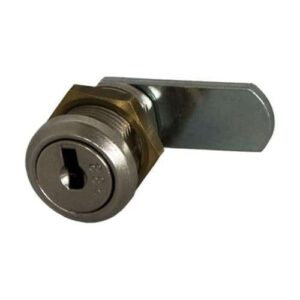
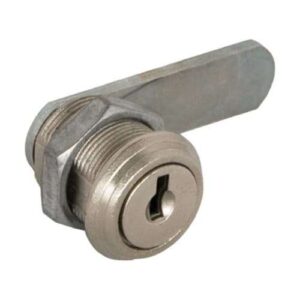
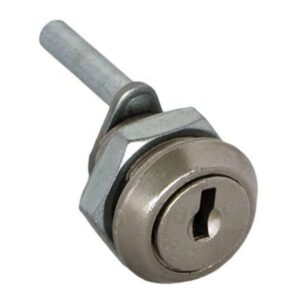
Mechanical cam locks: the cam mechanism is among the most popular locking systems for desks and drawers because of its versatility and compactness. These locks are suitable for space-constrained installations on wood, metal, and MDF, and are available in different finishes, cylinder lengths, and rear cam types. Some versions integrate a removable core, which allows the keying to be changed without removing the lock from the door-a particularly practical solution for office furniture, doors and sheet metal boxes.
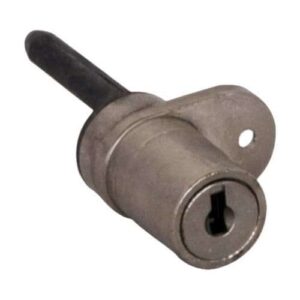
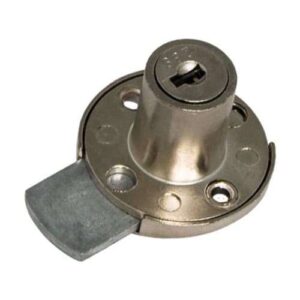
Centralized locking for drawer cabinets: a range of locks with rear actuators is available for multi-drawer cabinets, allowing the entire column to be locked and unlocked with a single key rotation. The rear pin can be cut to size to fit different cabinet heights. Encryption is configurable in KD (different keys), KA (single key) or MK master key modes for flexible access management in shared environments or on fleets of furniture.
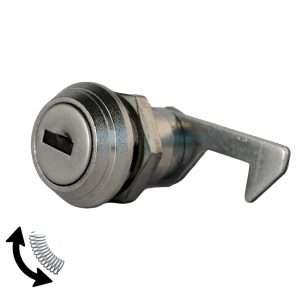
Automatic latch locks: an automatic latch solution is available for hinged doors and shutters: the hook cam engages the door in the locked position without the need to operate the key, which intervenes only for final locking. The key is removable only in the closed position, providing greater security of use.
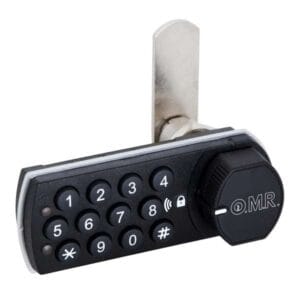
Electronic smart locks: for shared environments such as locker rooms, filing cabinets and baggage rooms, the keyless solution with integrated PIN keypad eliminates physical key management. With up to 10 years of battery life, no wiring required and complete management via app, it is the ideal answer to modern access control needs in industrial and community settings.
Filtra i prodotti
FOCUS
Single drawer or whole drawer unit?
For a single drawer, a standard Universal Wafer Camlock is sufficient, chosen according to the available space on the front panel and the length of the shank compatible with the thickness of the panel. For a multiple-drawer chest, the most efficient choice is the single lug lock or the universal lock with actuators: both allow all drawers to be locked and unlocked with a single key rotation. The difference is in the type of installation: the single fin is bolted to the flange, the actuator model uses nuts or horseshoe clips and has optional anti-tilt plates.Fixed or removable core?
If the bench is intended for prolonged use in a multi-operator environment, or if replacement of the cipher can be expected over time, it is worth choosing the Ø 19 universal lock with Detachable barrel core: the barrel can be removed and replaced without removing the lock from the door, eliminating any risk of damage to the cabinet.Hinged doors: manual or automatic locking?
If the door is to be locked permanently with a key, universal cam models are the standard solution. If, on the other hand, it is preferred that the door locks automatically upon slamming-useful on frequently opening doors-the spring-return latch lock is the correct choice: the hooked cam engages the door without actuating the key, which intervenes only for final locking.Panel material and type of fixing
The lock for door or drawer with round base covers the widest range of materials: wood, metal, MDF, also available in technopolymer for corrosion-prone environments or for those looking for a more polished look. For metal panels with limited back space, horseshoe clip attachment of the actuator model speeds up assembly. Always check compatibility between drilling diameter (17 mm for single cam, 19 mm for universal) and machining already on the cabinet.Shared environments and access management
When the counter is used by multiple operators on different shifts, physical key management can become critical. The Hellock electronic lock eliminates this problem: Each operator has his or her own personal PIN, which can be changed or revoked at any time via app, without any mechanical intervention on the lock. It is the ideal solution for locker rooms, tool rooms and shared workstations in corporate environments.FAQ
What does "removable core" mean and why is it useful?
Detachable core is a barrel that can be removed from the lock without removing it from the door or drawer. This allows the encryption-and thus the keys-to be replaced at any time, without risking damage to the cabinet. It is particularly useful in settings with staff rotation or if keys are lost, because it requires neither replacement of the entire lock nor carpentry or joinery work.
What is the difference between single lug lock and universal lock with actuators?
Both handle central locking of drawer units, but with different mechanisms. The single lug lock has a flange with screw holes, a 21-mm cylinder body, and a trimmed bolt that makes it compact and suitable for vertical and horizontal installations. The universal with actuators has a Ø 19 mm body, nut or horseshoe clip fastening and a 45 mm rear pin tumbler that can be cut to size: it is more flexible on panel thickness and is combined with anti-tilt plates that prevent more than one drawer from being opened at the same time.
What is the importance of finish when choosing locks for workbenches?
The finish of the lock not only affects the overall aesthetics of the cabinet, but also its resistance to corrosion and wear. Finishes such as stainless or nickel-plated are ideal for environments where moisture or chemicals may be present.