A lock family with a thousand names
If you’re looking for information on cam locks, you’ve probably already run into the problem: there isn’t a single, universally accepted term for them in Italian. Depending on the supplier, industry, or context of use, the same lock is called a cam lock, lever lock, universal cam lock, lever cylinder, lever latch, tongue lock, or simply a cam lock. In English, the term is “cam lock,” which is universally used by manufacturers and designers. When it comes to coming up with nicknames, we Italians are unbeatable.
This fragmentation, however, is not random: it reflects the extraordinary versatility of cam locks, which are installed on metal cabinets and communal lockers, low- and medium-voltage electrical panels, apartment building mailboxes, drawers and filing cabinets, roller shutters and sliding doors, covers for utility compartments, storage bins, and toolboxes. In each of these sectors, the product has become a de facto standard—and in each, it has taken the name of its most common application.
This guide uses the term cam lock as the main reference, but in the application sections you will also find the specific terms used in individual areas, so you can easily orient yourself no matter what context you are operating in.
What you will find in this guide
This guide is designed for engineers, designers, and purchasing managers who need to specify or select a cam lock as a component of their product-not for the end user who purchases a single one for home use.
To explore the complete catalog, visit the OMR cam locks page.
What is a cam lock: technical definition
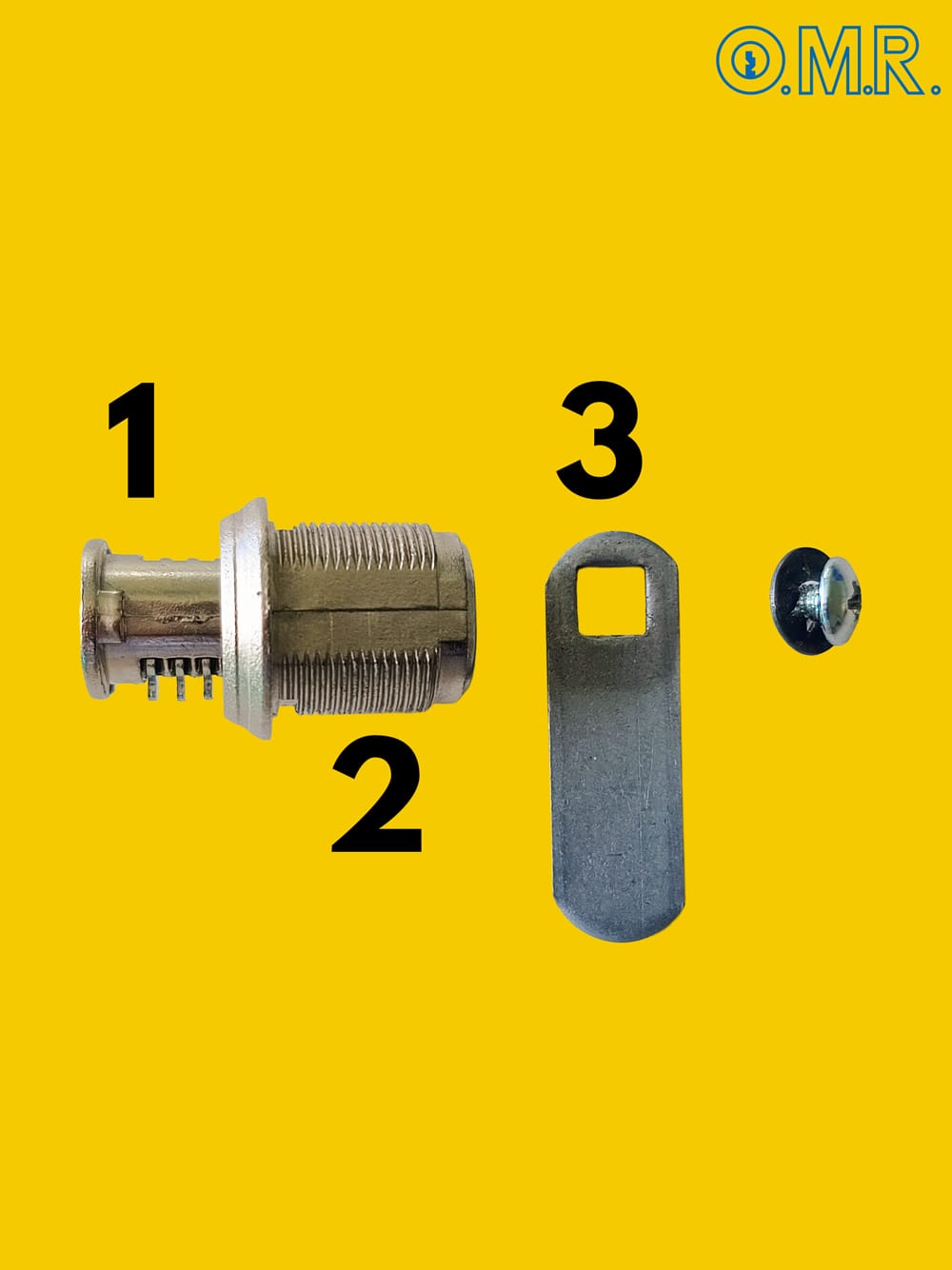
A cam lock is a mechanical locking system consisting of three main elements:
- 1. Barrel: the internal moving part into which the key or operating tool is inserted. It contains the security mechanism—either a wafer tumbler mechanism or a pin tumbler—that allows rotation only with the correct key. Here, too, there are numerous Italian names for this component: nottolino, cilindretto, bariletto, etc.
- 2. Stator (body): the fixed part, which passes through the front panel and is anchored to it by nut, snap spring, horseshoe clip or screws.
- 3. Cam: the rear metal cam, integral with the barrels, which rotates with it and locks or releases the door, drawer or lid by engaging with the internal structure of the cabinet. In Italian, you can call the cam in many different ways depending on the area and the use, but this is not an exception in Italian — nicknames and chaotic nomenclature is daily routine. And, incredibly, it works anyway!
The operating principle is mechanically elementary: the key aligns the internal elements of the mechanism, the barrels rotate 90° or 180°, and the cam moves. It is this simplicity – few components, no critical wear points, installation in minutes on a standard bore – that makes cam locks the default locking system for anyone who manufactures technical furniture, industrial containers or equipment that requires controlled locking of a compartment.
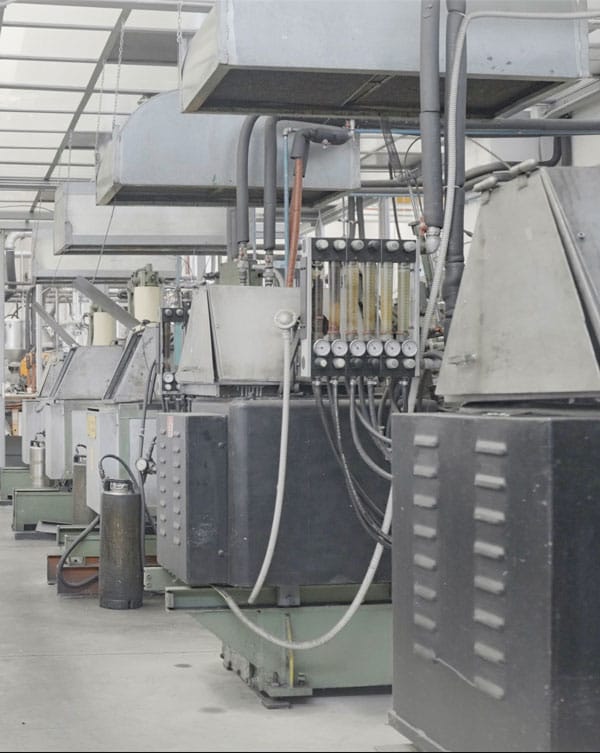
OMR Foundry Department-Zamak rods are cast to be press molded into components.
Materials of manufacture: what's inside a cam lock
A cam lock is not a monolithic component: each of its parts is made of a different material, chosen according to its mechanical role and the stresses it will have to withstand. Understanding the composition at the individual component level is the first step in correctly specifying the product.
The standard composition
- Stator (body): zinc-aluminum-magnesium-copper alloy, commonly known as Zama (known as Zamac or Zamak). It is a die-cast, dimensionally accurate material with good mechanical strength and ease of processing. OMR processes zamak in-house, from casting to finishing, with direct control over each production batch.
- Barrels: also made of zamak in the standard version. In intermediate versions-suitable for environments with occasional humidity or exposure to splashes-the rotor is coated in stainless steel, often combined with a dust flap on the key input.
- Cam: steel. The cam withstands bending and impact stresses that zinc alloy would not withstand over time: the material change here is not cosmetic, it is structural.
- Key: nickel-plated brass in the standard version. Brass provides machining precision and wear resistance at contact points with the inner mechanism.
The three main material configurations
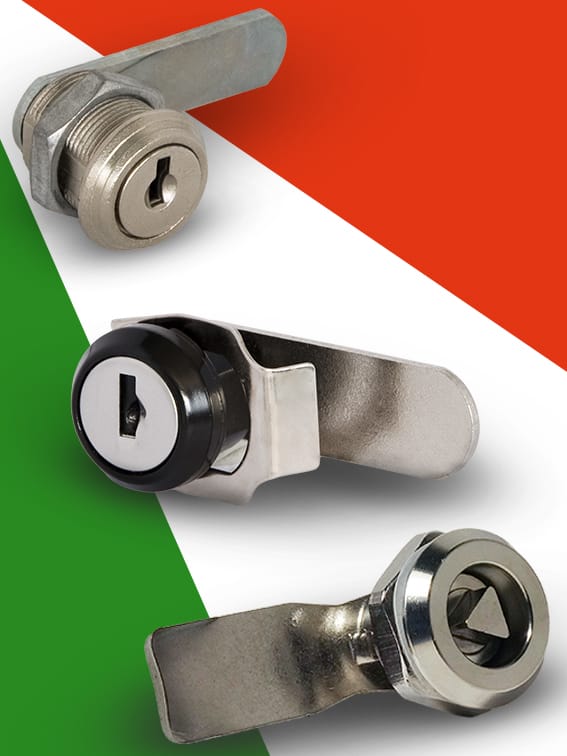
Nickel-plated zamak - standard configuration
Zamak barrel and stator with nickel-plated finish, steel cam, nickel-plated brass key. It is the right choice for indoor protected environments: offices, schools, indoor locker rooms, warehouses, indoor industrial furniture. Nickel-plated finish offers good resistance to ordinary corrosion and a neutral appearance that complements most metal cabinets and technical furniture.
Zamak with stainless steel guards - intermediate configuration
The body remains zamak, but the barrels are protected by a stainless steel cap, and the key entry is closed by a dust flap. It is a suitable choice when the lock is exposed to frequent moisture, dust, water splash, or major temperature changes, but not to continuous environmental aggression. Typical applications: car box exteriors, motorcycle trunks, covered construction equipment, semi-exposed technical compartments.
Stainless steel 304 - premium configuration
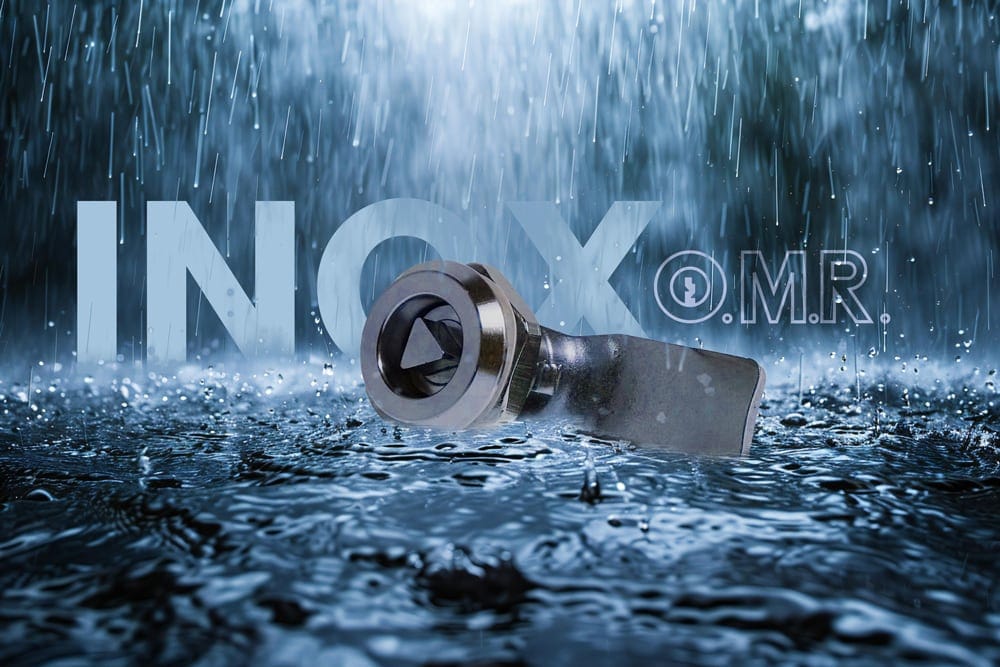
Body, barrels and cam made entirely of stainless steel AISI 304. It is the obvious choice for coastal (saltwater) environments, professional kitchens, industrial laundries, water treatment plants, outdoor installations without protection. OMR manufactures this configuration both in shape (triangular, hexagon, screwdriver) and with integrated open/closed status indicators-a relevant detail for electrical panels subject to periodic inspections.
Technopolymer: when plastic is as good as metal
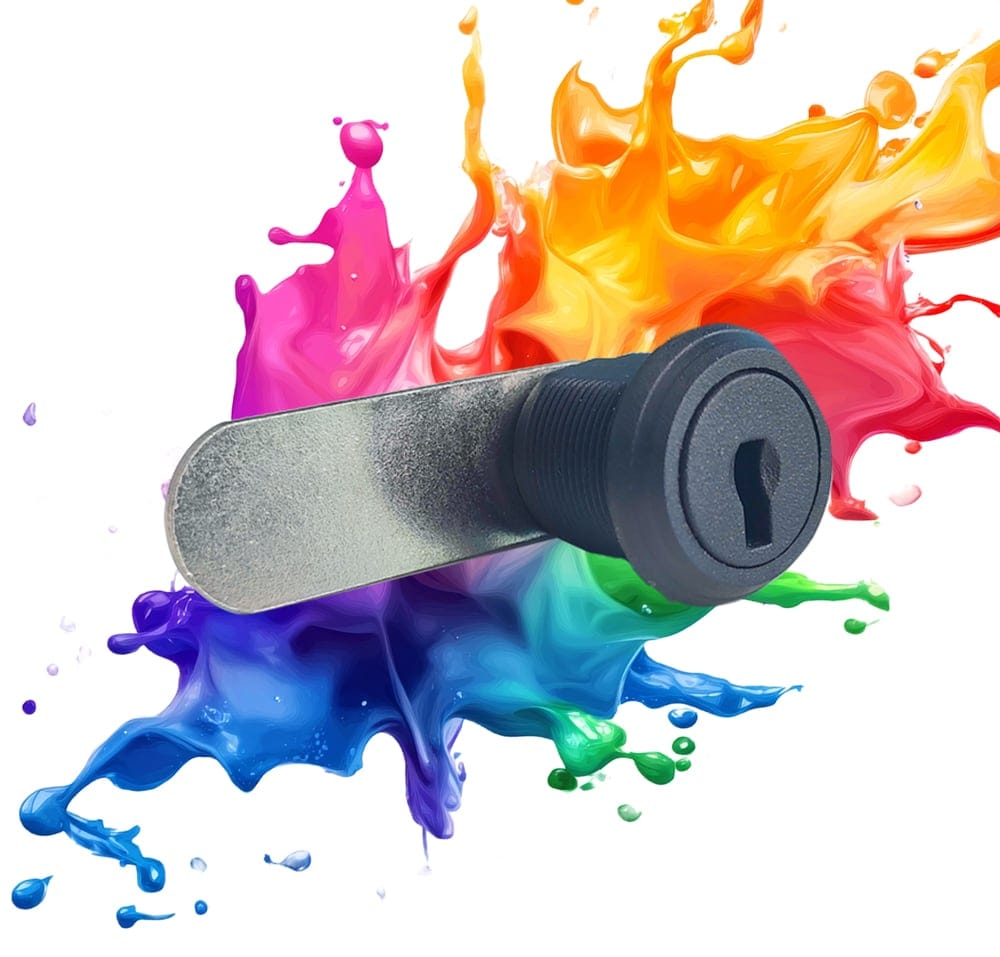
There is a fourth, lesser-known but significant option for some product categories: engineering polymer, which OMR calls a "metal plastic." This is not a marketing claim: it is an engineered material with mechanical performance comparable to that of metal alloy in weathering and corrosion resistance, a feature that designers are familiar with, such as the ability to process it in a wide range of colors.
This last feature is not secondary. In many applications, the locking system must integrate chromatically with the finished product: advertising panels, displays, exhibition corners, machinery actuator panels with curated aesthetics, isothermal boxes. In these contexts, technopolymer eliminates the post-installation painting step and ensures uniform, long-lasting coloring without the peeling risks typical of powder coatings on metal.
Functionally, the technopolymer versions support the same cam geometries as the metal versions (straight cams, cranked cams, hooked cams, rods) and are compatible with the addition of O-rings (OR) for protection to IP65 standards. The lower weight compared to zamak is an added advantage for applications on lightweight panels or structures where overall mass is a design parameter.
Internal mechanism: wafer plate-cylinders or pins?
For the same external appearance, two cam locks can have completely different internal mechanisms. The choice between plate-cylinder mechanism and pin tumbler mechanism is not a matter of preference: it depends on the level of security required, the expected frequency of use, and the type of product in which the lock is integrated.
The plate-cylinder mechanism
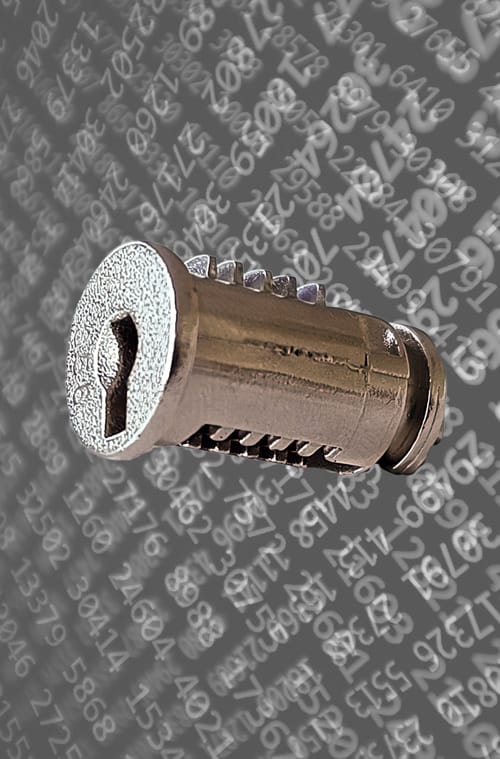
Housed inside the rotor are a series of thin metal plate-cylinders –typically five – each of which can assume different positions depending on the key cuts. When the correct key is inserted, all plate-cylinders simultaneously align at the same height, freeing the barrel and allowing rotation.
The strength of this system is its mechanical simplicity: few components, wider machining tolerances, low cost, and reliability under normal use. For this reason, plate-cylinder cam locks dominate in applications where the lock is more to prevent occasional access than to resist deliberate attempts at break-in: communal lockers, office furniture, filing cabinets, mailboxes, gaming machines, and low-value vending machines.
The structural limitation of the plate-cylinder mechanism is the relatively small number of possible combinations, which makes it more vulnerable than the pin tumbler mechanism in terms of both key duplication and picking resistance. In applications where access management is critical, this is a factor to consider in specification.
The pin tumbler mechanism (pins)
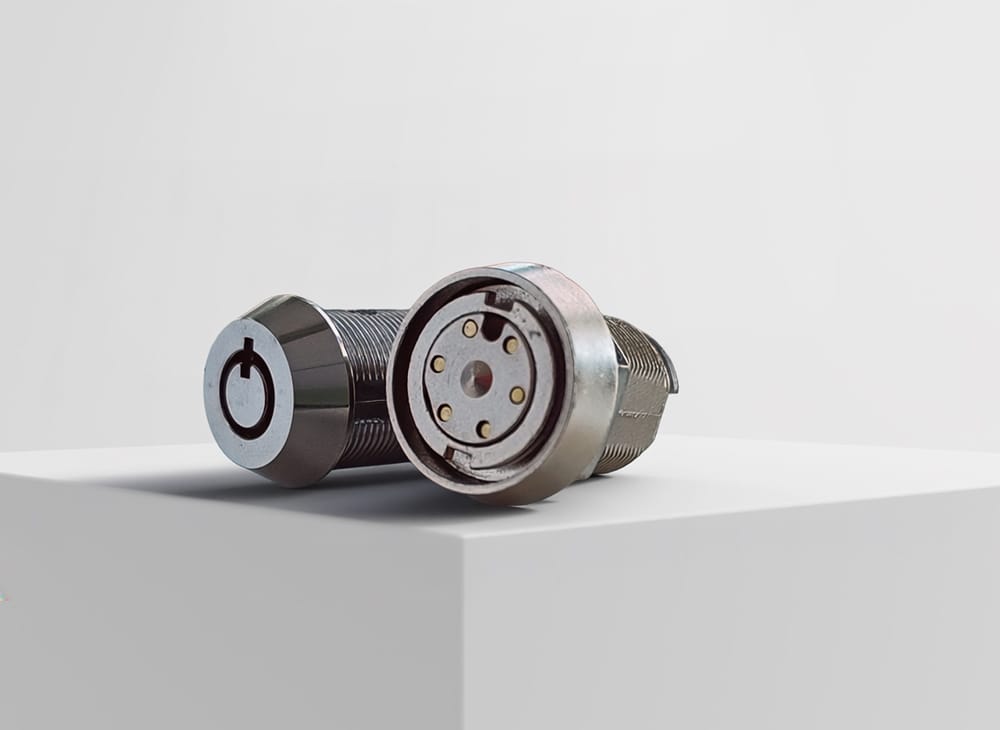
A series of cylindrical pins, each consisting of two segments, are arranged inside the barrel. At rest, the pins cross the shear plane between the rotor and stator, locking the rotation. When the correct key is inserted, the key profiles push each pin to the exact height required for the joint line between the two segments to coincide with the shear plane, freeing the barrel.
Compared with plate-cylinders, the pin tumbler mechanism offers significantly more possible combinations, greater resistance to manipulation, and higher mechanical accuracy. OMR manufactures pin tumbler versions in standard pin tumbler, tubular key, and radial pin tumbler configurations (the so-called Red Jack key), the latter of which is also available in a reprogrammable version-a relevant detail for those managing fleets of lockers or applications where keys must be reassigned over time without replacing the lock. If you are interested in learning more expand the section below

The photo shows an exploded view of a pin tumbler lock. From left: key, barrel with 5 spring-loaded pins already inserted, 5 pins with springs to be inserted into the stator—which already contains 5 pins (brass band)—and the cam with the retainer. A pin tumbler system is complex and difficult to tamper with. Premium product.
FOCUS: Pin tumbler locks, the premium choice.
The three available key types are not cosmetic variations: they define three distinct levels of application, with concrete implications for security, key management and maintenance over time.
- Standard flat key: traditional toothed profile with more combinations than plate-cylinders. Suitable for technical cabinets, electrical panels and industrial containers where reliable locking and orderly access management are needed. Available in KA encryption (all locks can be opened with the same key), KD (each lock has its own key) and MK (individual keys with master passe-partout).
- Tubular wrench: cylindrical hollow, with the cutting profiles arranged radially on the inner edge. It further increases the number of possible combinations and picking resistance compared to the toothed wrench. It is the standard choice for vending machines and technical equipment with restricted access where the contents have significant economic value.
- Radial pin tumbler key (Jack): radial pin system operated by the distinctive red key. The reprogrammable version allows the combination to be reset directly in the field, without replacing the lock-a significant operational advantage for those managing fleets of lockers in settings with high user turnover (corporate locker rooms, hospitality facilities, schools).
Plate-cylinders or pins: the choice in two questions
What are you protecting? If the contents have significant economic value, if unauthorized access involves risk or liability, or if the lock will be subject to heavy daily use for years, the pin tumbler mechanism is the correct specification. If the lock is primarily for organizing access in a low-risk context, plate-cylinders are more than sufficient.
How do you manage the cams? If you need differentiated encryptions, passe-partouts, or the ability to reconfigure keys over time without mechanical intervention, the pin tumbler system-and particularly the reprogrammable Jack version-is the only real answer.
Types of fixing: how to install the lock on the panel
Before choosing the type of fastener, there is one construction detail common to almost all cam locks that those designing the installation hole should be aware of: the cylindrical body is milled on two opposing sides, forming a so-called double D. This geometry prevents the lock from rotating in the housing once installed, ensuring that the rear cam will maintain its orientation over time regardless of the type of fixing chosen.
The actual fixing-the one that holds the lock integral to the panel-can be done in five ways, each designed for a different production and application context.
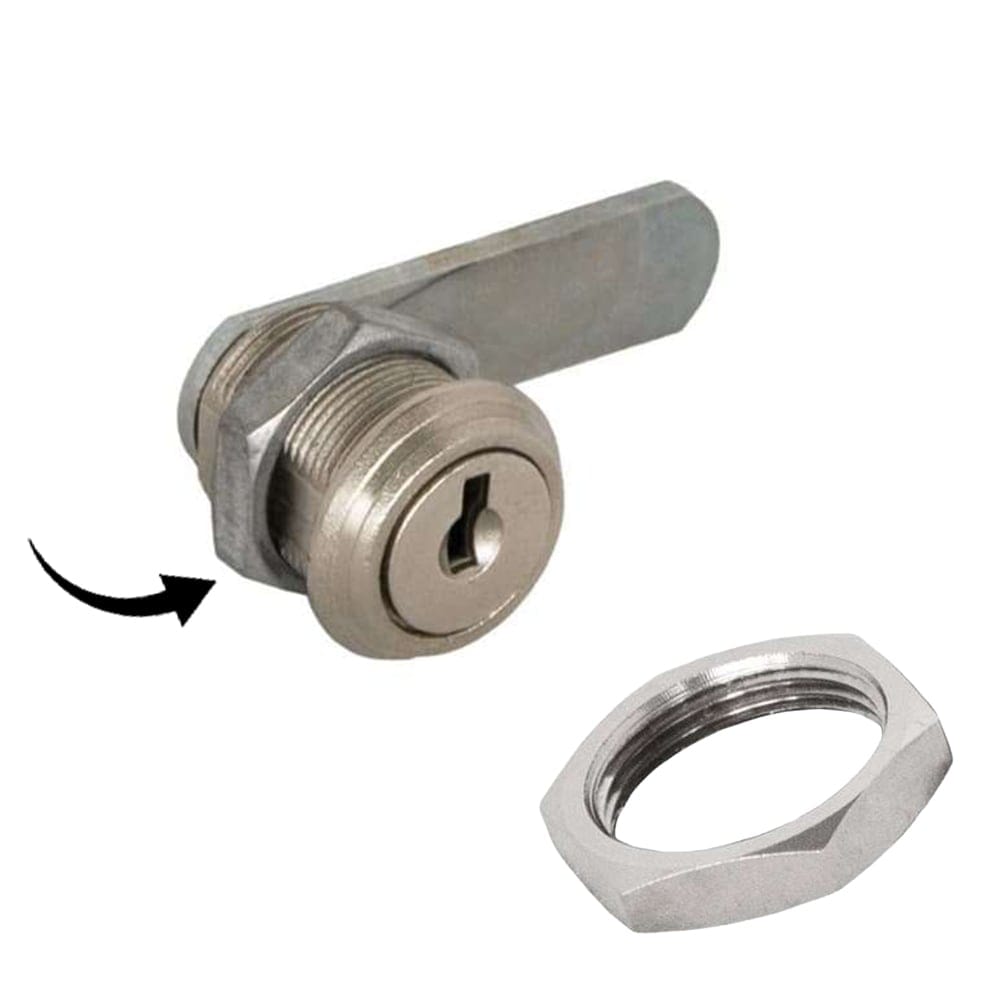
Threaded nut
This is the most popular and versatile system. The lock body is externally threaded: a nut is screwed in from the back of the panel, which tightens the body against the front surface. It allows precise adjustment according to panel thickness and fits a wide range of materials and thicknesses. It is the natural choice for single installations, replacements, and any situation where variability in thicknesses makes flexibility necessary. Requires access to the back of the panel and a small wrench.
Snap spring (quick fastening)
The lock body has spring-loaded side lugs that open automatically as soon as the body is pushed into the hole, engaging the panel without any tools. Installation takes seconds: simply insert the lock into the hole and push it in until it clicks. It is compatible with steel, aluminum and plastic panels, ideal for thin sheet metal thicknesses. This solution is the preferred one for mass assembly on a production line, where installation time is a direct cost parameter. It does not require access to the back of the panel.
Horseshoe clip
A two-arm metal horseshoe clip is inserted into special grooves on the lock body, locking it laterally. It provides a very strong anchorage, particularly suitable for applications subject to repeated vibration, shock or mechanical stress. It is the typical choice for heavy industrial metal cabinets, construction equipment, and applications where the standard nut might loosen over time. Requires access to the back of the panel.
Screws and rivets
Permanent attachment by screws or through-rivets. Provides maximum structural strength and is the correct choice for permanent installations where the lock will never be removed or replaced. Typically used in exposed outdoor applications, permanent structures, and any context where secure fastening is more important than future serviceability.
Weld-to-fix
Niche solution for very specific industrial applications where the lock must be permanently integrated into a welded metal structure. Practically irreversible: should be specified only when there is no practical alternative.
Which fastening to choose?
Are you installing in small quantities or replacing an existing lock? Threaded nut - maximum flexibility, no surprises.
Are you mounting on a production line or thin sheet metal? Snap spring-zero tools, minimal time, compatible with steel, aluminum and plastic.
Is the application subject to vibration or mechanical stress? Horseshoe clip - rigid anchorage, will not loosen over time.
Is the installation permanent and outdoor? Screws, rivets or welding - irreversible but unassailable.
Key type and encryption: control who opens what
In the specification of a cam lock, key type and encryption system are two distinct aspects that are often confused. Key type concerns the physical shape of the drive profile-and determines the level of mechanical security of the barrel. Encryption, on the other hand, concerns how keys are managed among multiple locks-and determines who can open what within a system.
The type of key
Cam locks are available with very different key profiles designed for different application contexts.
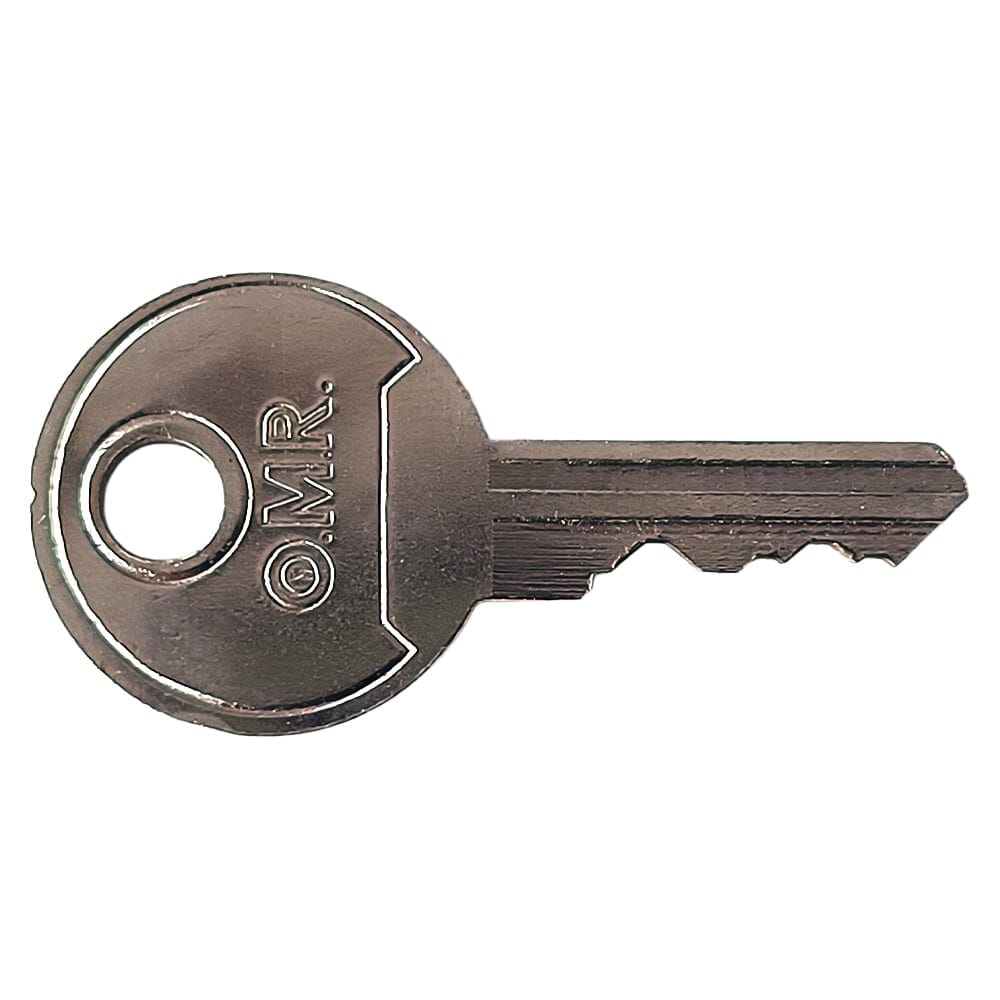
Standard key
The most common profile. Edge cuts define the combination and operate the plate-cylinders or barrel pins. Available in a nonreversible version-it must be inserted in one direction only-and a reversible version, which can be inserted indifferently in either direction. The latter is appreciated in high-frequency use settings where the user must be able to open quickly without checking orientation.
Socket keys
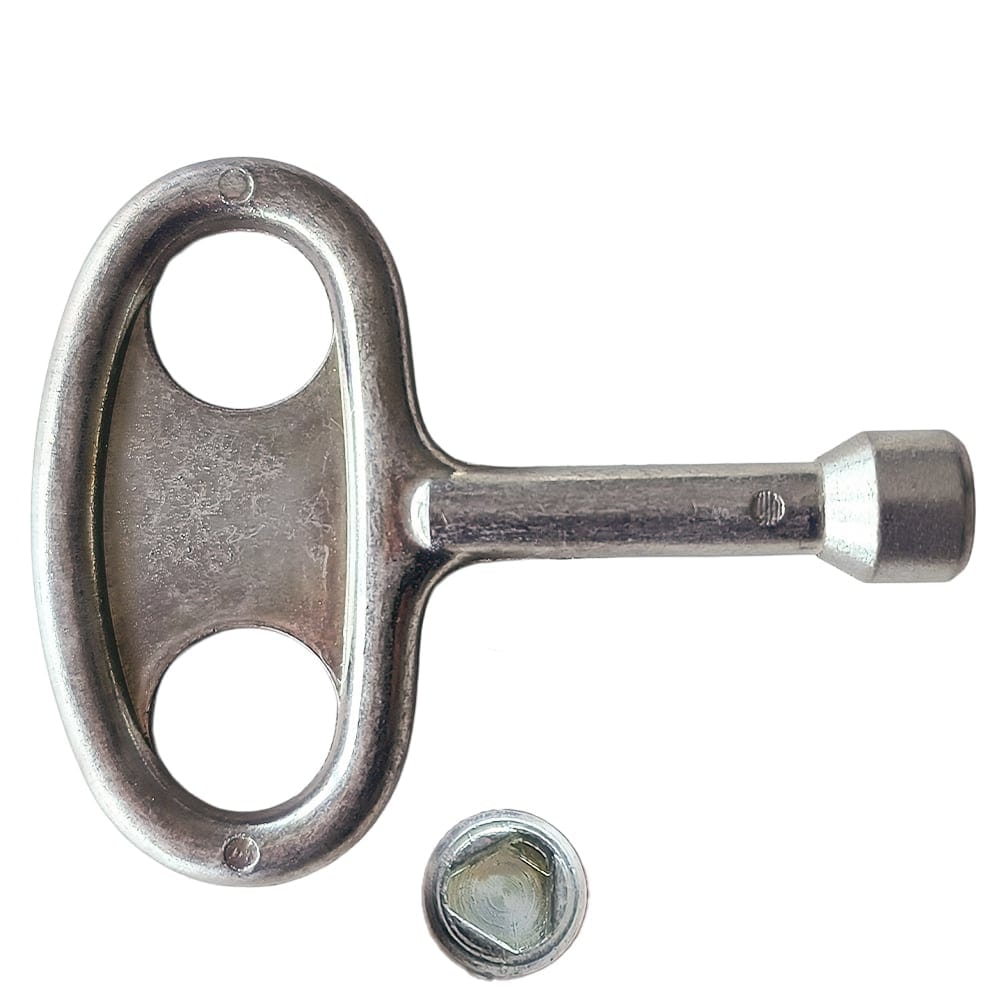
The barrel is operated by a tool or key with a specific geometric profile: triangular (T5 or T6), square (Q7), hexagonal, screwdriver, Double barb - 3 mm Pin, double barb - 3 mm Pin, or special shape (e.g., Fiat). They are the standard choice for electrical panels, technical panels and service doors: they require an uncommon tool, discouraging opening by anyone not equipped, with no need to manage a fleet of keys.
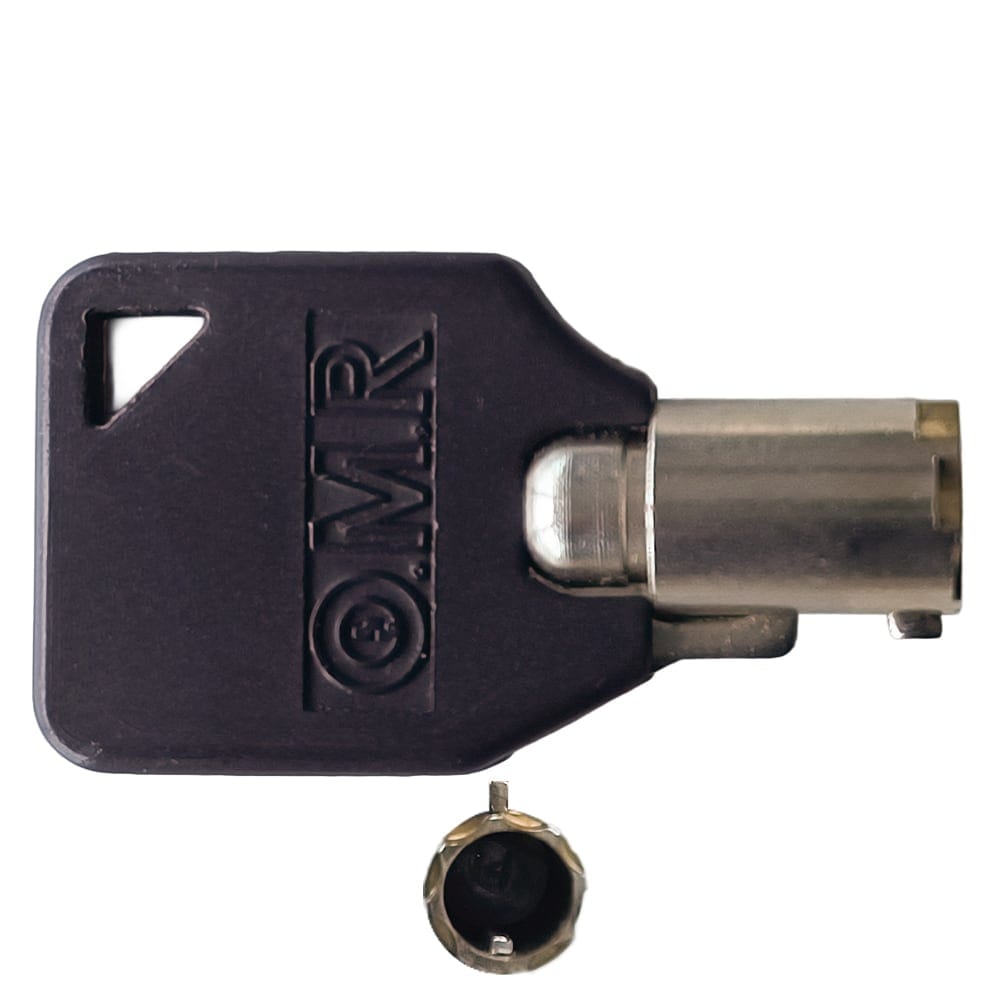
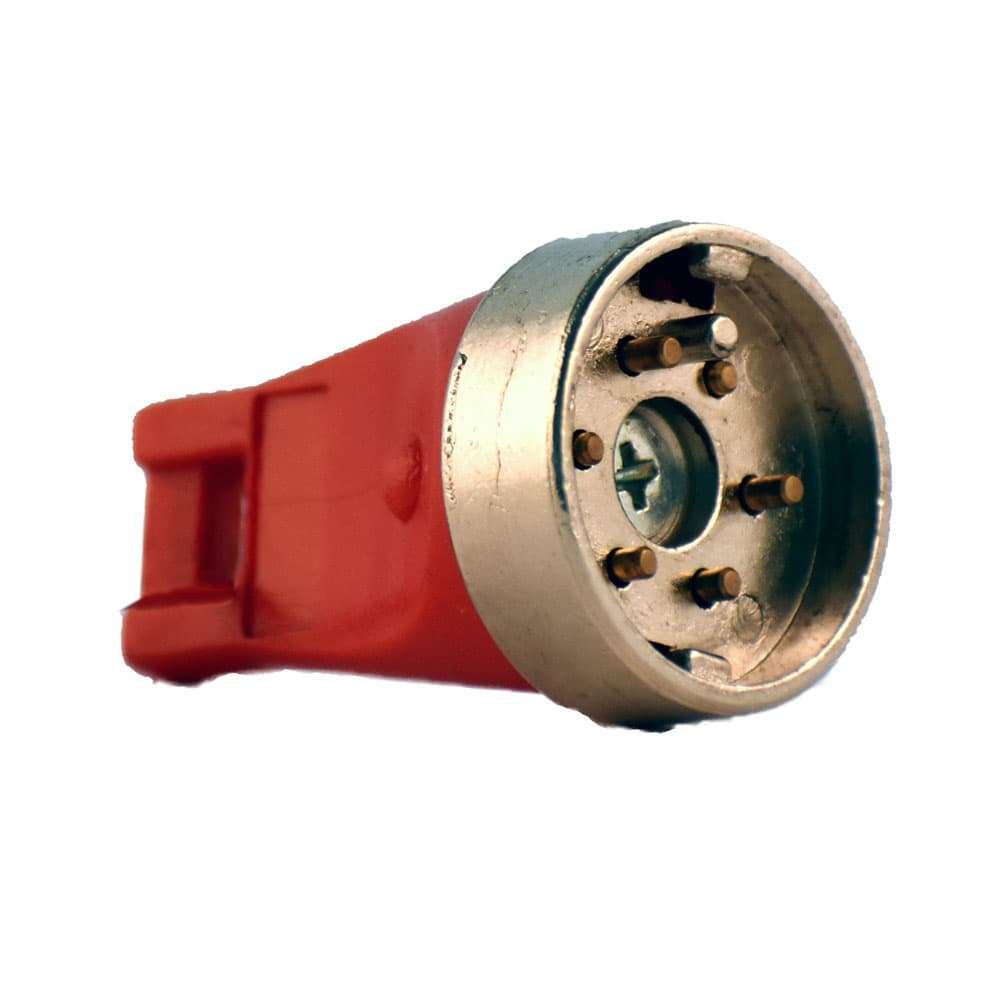
Tubular key and pin tumbler radial key (aka Jack key)
High-security profiles already covered in the section on pin tumbler mechanism. The reprogrammable Jack version allows the combination to be reconfigured without replacing the lock.
Number combination
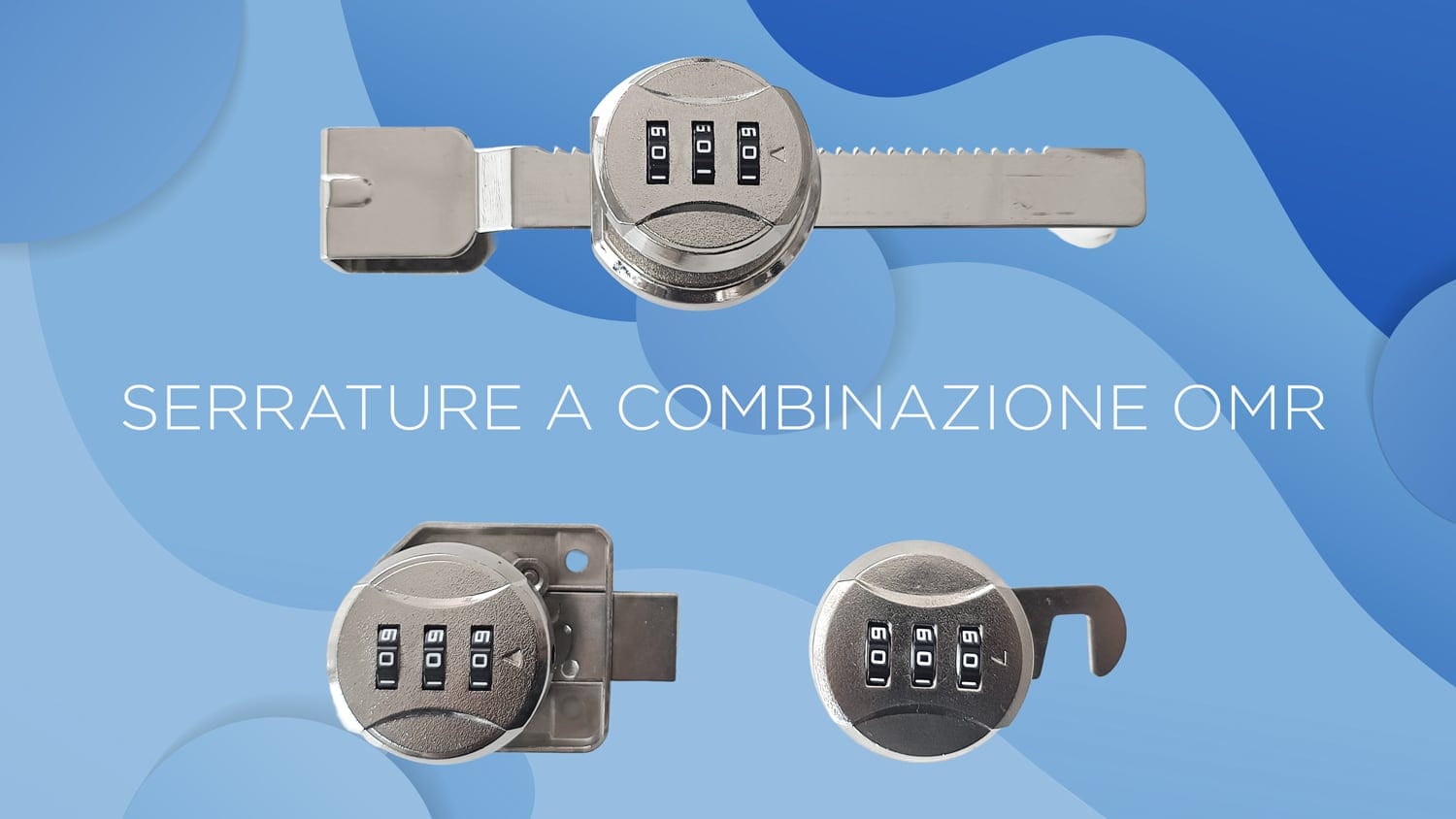
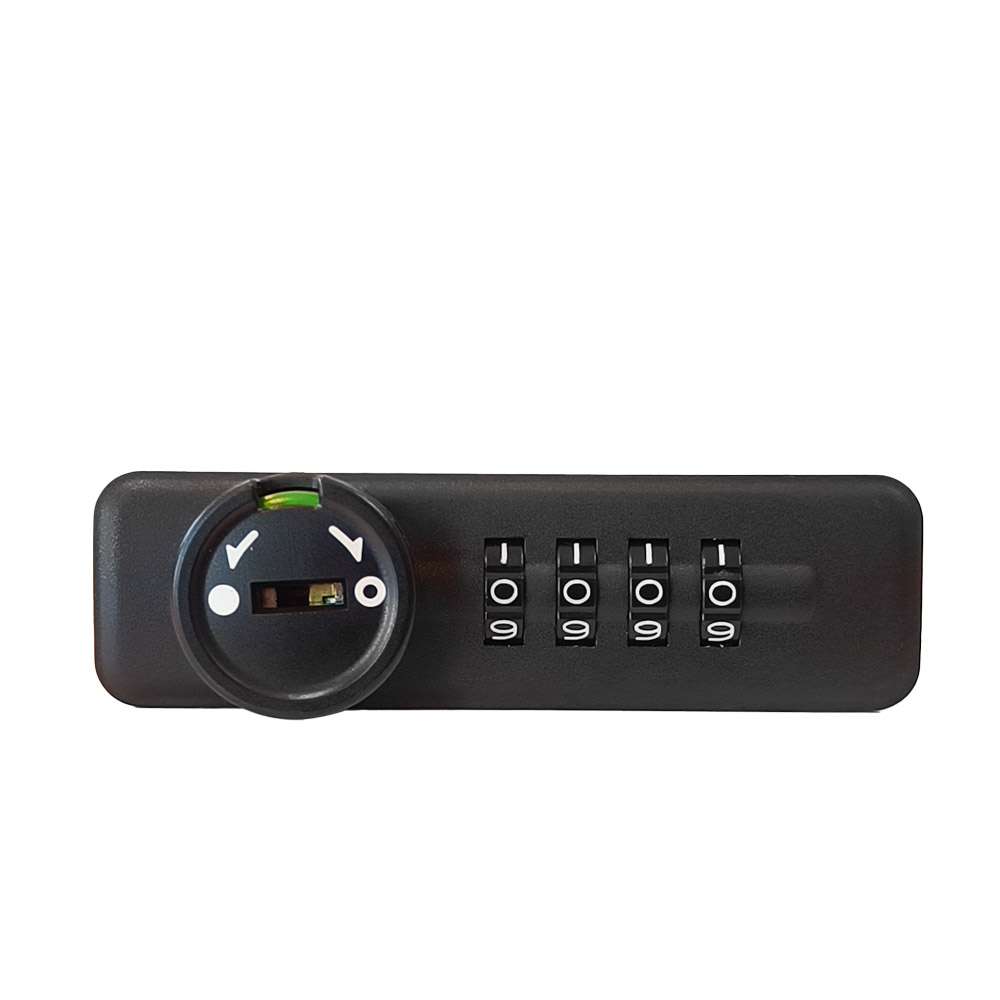
No physical key: opening is done by typing a code on a mechanical number ring. Eliminates the problem of lost keys and unauthorized duplication. Available in public mode-where the code can be reset each time it is opened-or with a fixed code. Suitable for collective lockers in settings with high user turnover.
Cross key
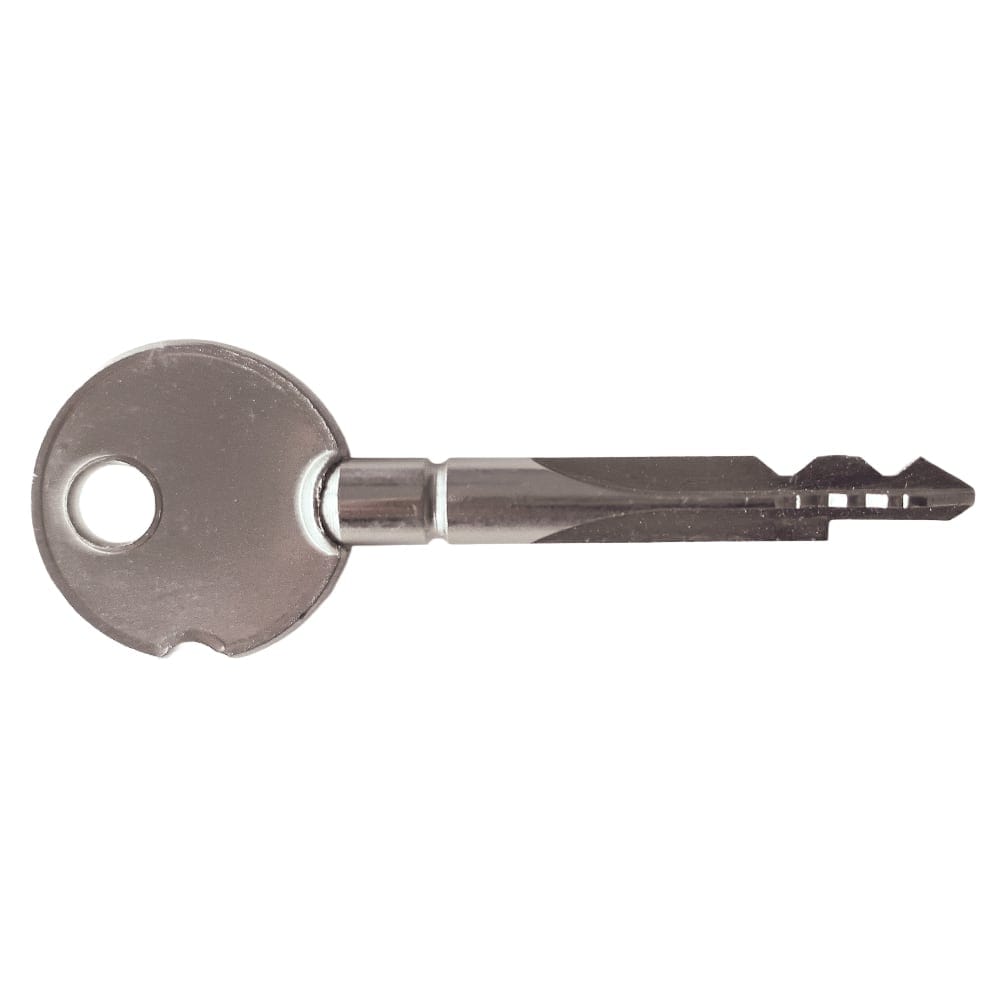
Key with side pins that operate a high-precision internal mechanism. Offers a high number of combinations and good resistance to unauthorized duplication. Suitable for professional applications where controlled key management is a requirement.
Padlock
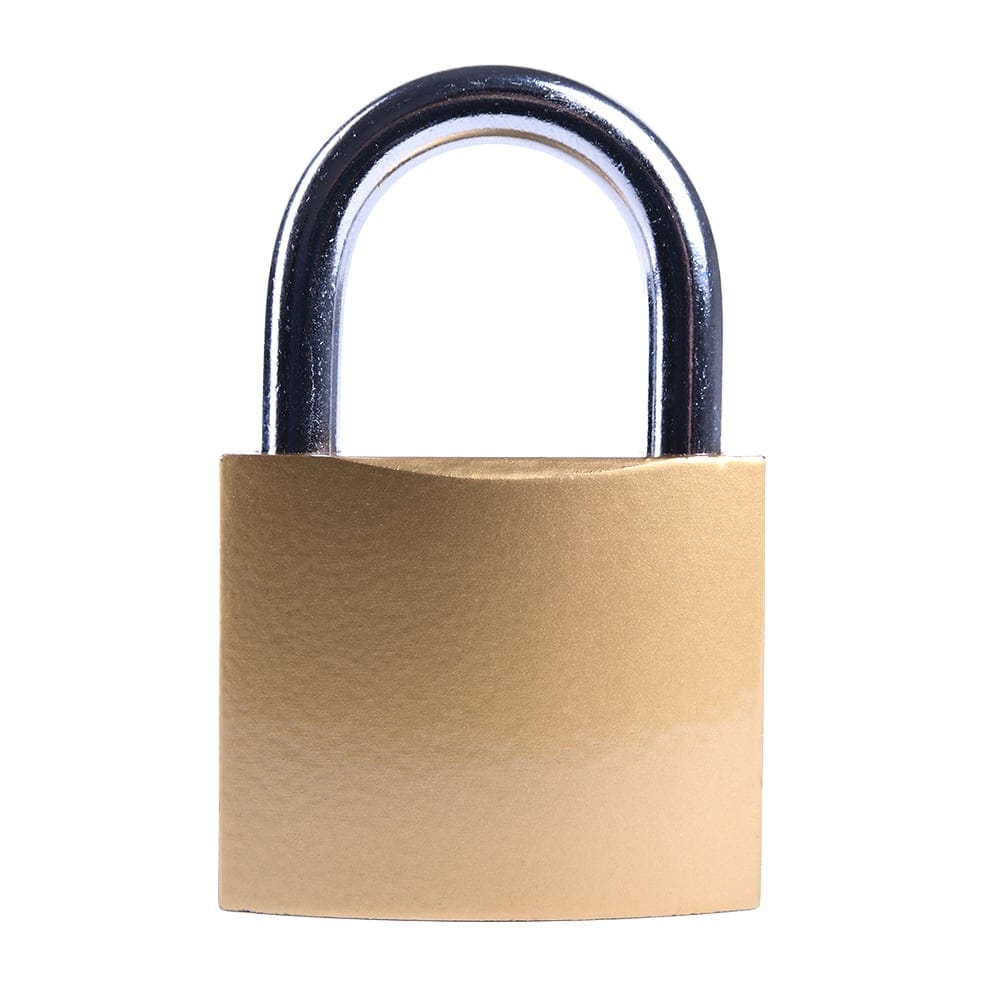
The lock does not have its own locking mechanism but is designed to accommodate an external padlock. Useful when you want to delegate the choice of security level to the end user, or when the padlock is already in the system and you are simply looking for a standardized anchor point on the panel.
Handle or knob (without key)
Mechanical locking without access control: the lock opens simply by operating the handle or knob, without inserting a key. The correct choice when the required function is only to keep the door closed-by vibration, wind pressure, or to prevent accidental opening-with no need to restrict access.
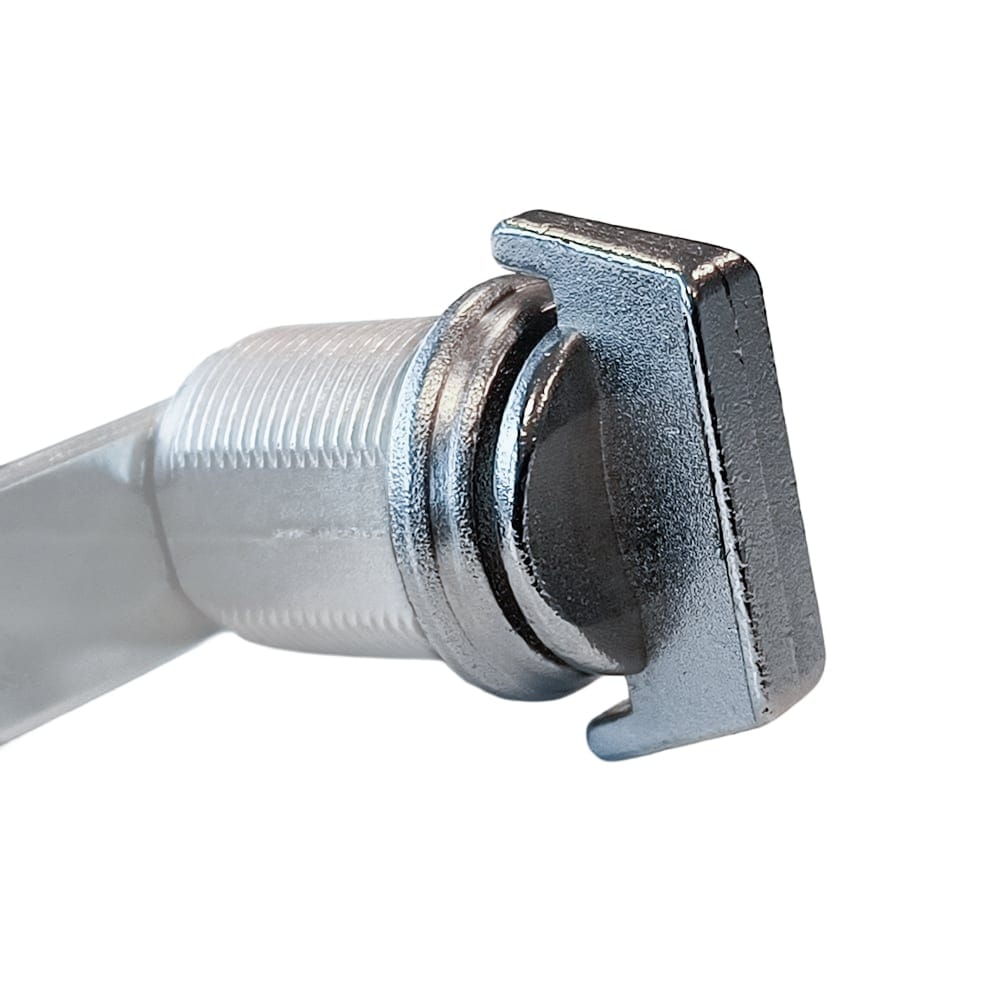
Fingerprint
Biometric recognition integrated into the lock body. OMR offers this solution with the BioLock model, which allows multiple fingerprints to be stored and access managed without physical keys or codes. Suitable for applications where security and access traceability are priorities.
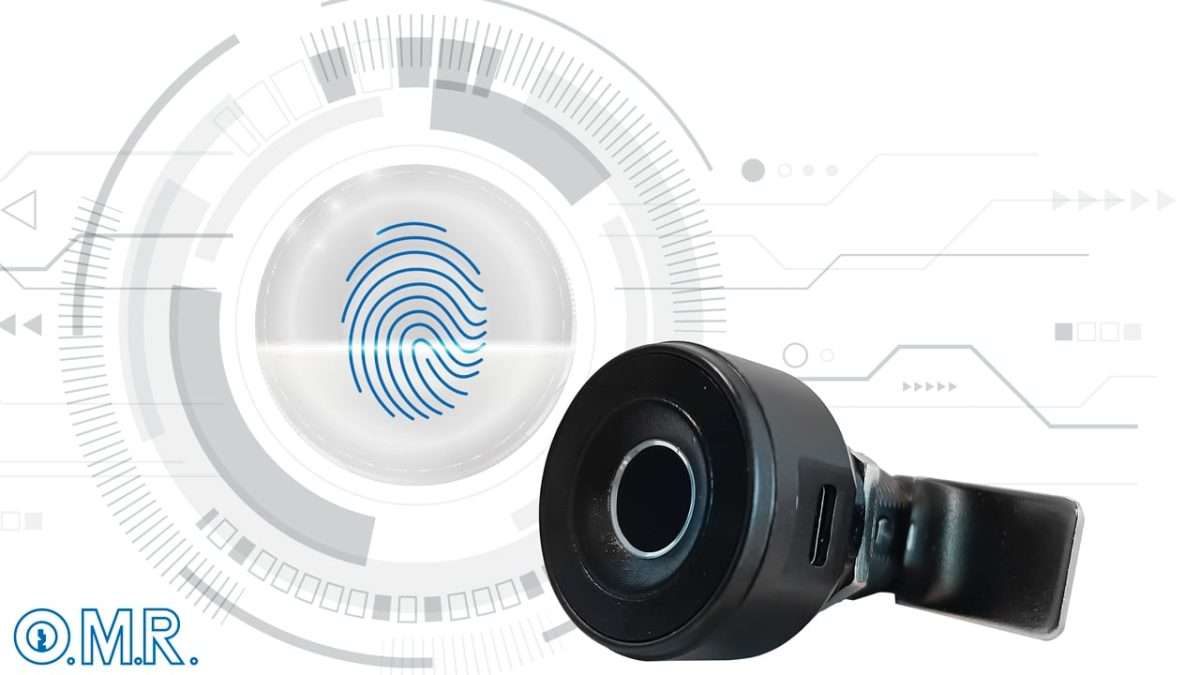
Bluetooth, RFID, hSC and electronic systems
The most advanced level: unlocking via RFID badge, smartphone via Bluetooth, HSC cards, or digital PIN. These systems allow for centralized access management, immediate revocation of authorizations, and, in some models, the recording of unlock logs. They are the natural solution for installations in settings where the manual management of physical keys becomes an operational challenge—large fleets of lockers, lockers in hospitality facilities, and electrical panels in facilities staffed by multiple operators.
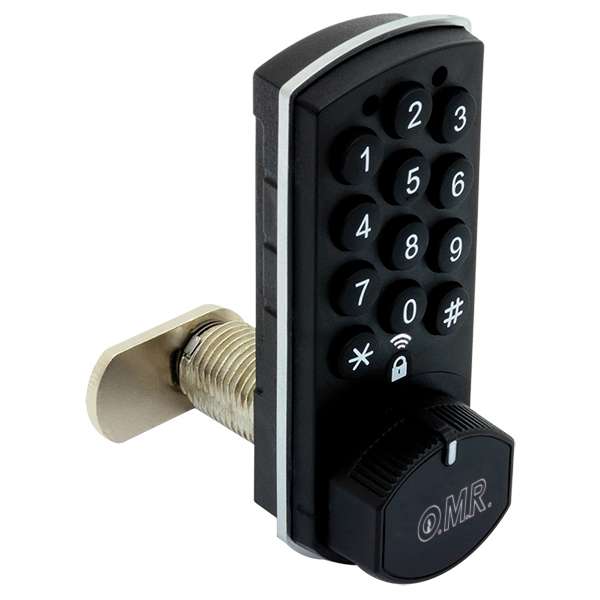
Encryption by standard keys, i.e., who opens what
When installing multiple cam locks on the same product or in the same environment-a bank of cabinets, a row of switchboards, a multi-drawer chest of drawers-a practical question inevitably arises: how many keys are needed, and who can open what? The answer is called encryption: the system by which lock combinations are designed and distributed so that each key opens only the authorized compartments, no more and no less.
Defining encryption when ordering is not a minor detail: changing key management after installation means physically replacing locks. It's worth thinking about it first.
KD - Keyed Different
Each lock has its own key, different from all others. This is the basic configuration, suitable when each compartment needs to be independent and no common key is required. Typical of collective lockers where each user independently manages his or her own access.
KA - Keyed Alike
All locks in the system share the same combination and open with the same key. This is the correct choice when a single person or group needs access to all compartments without managing a bunch of keys-for example, the warehouse manager who needs access to all tool cabinets, or the maintenance technician who works on several identical electrical panels.
MK - Master Key
Two-level system: each user has his or her own individual key that opens only his or her compartment, while a master key (passe-partout) opens all cylinders in the system. It is the most flexible solution for contexts with many users and need for centralized supervision - corporate locker rooms, archives, lockers in hospitality facilities.
For more complex applications-three- or four-level hierarchical systems, temporary site keys, condominium installations-OMR offers advanced training systems (CC, CMK, GMK, GGMK). Check out the dedicated training page for a complete overview.
How to choose the encryption system
Should each user manage their own compartment independently? KD - one key per lock, no overlap.
Does one person have to open everything? KA - one key for all locks in the system.
Do you have individual users but also need centralized supervision? MK - individual keys plus master passkey.
Do you want to avoid doors being left open out of distraction? Specify key extraction in the closed position only (position 1).
Cam geometry: shapes, orientation and technical parameters
The cam-the rear cam that locks or releases the door-is not a fixed part of the lock but an interchangeable accessory. Most cam locks mount a standardized square-shaped rear end (7 or 8 mm on a side) to which cams of different shapes can be mounted without replacing the lock body. This means that the choice of cam geometry is a design decision separate from the choice of lock, and can also be changed during product revision without redesigning the installation hole.
The main geometries
Straight cam
The basic shape: a flat cam that extends linearly from the lock terminal. It works on flush doors, standard drawers, and any application where the inside stop is aligned with the axis of the panel. It is the correct choice for the vast majority of cases and the starting point when there are no special geometric constraints.
Cranked cam
The cam is cranked relative to the axis of the lock body. It is used when the inside door stop is offset from the plane of the panel - a typical situation in metal cabinets with cranked profiles, where the edge of the sheet metal creates a step that a straight cam would not be able to climb over. The bend can be positive (toward the outside of the panel) or negative (toward the inside), depending on the specific geometry of the cabinet. The correct specification of this parameter requires knowing the depth and direction of the sheet metal crank.
Hook cam
The cam ends in a hook that engages a fixed striker on the cabinet frame. It is suitable for sliding doors-where a straight or cranked cam cannot lock the panel against lateral movement-and for any application where forced lifting of the door is to be prevented. It offers superior handling resistance compared to flat cams.
Orientation and B dimension: the parameters for the draughtsman
Those who need to integrate a cam lock into a CAD drawing need two pieces of information that never appear in commercial product descriptions but that determine whether or not the lock will work in the application.
Cam orientation
The angular position in which the cam is located when the lock is closed is conventionally expressed as an hour on a clock face: 3 o'clock, 6 o'clock, 9 o'clock, 12 o'clock. This parameter determines in which direction the cam moves during rotation and must be consistent with the position of the internal cabinet striker. Specifying it correctly when ordering avoids receiving locks that rotate in the wrong direction relative to the locking profile.
Size B
This is the operating length of the cam, measured from the center of the lock to the end of the cam. It determines how much travel the cam has to engage with the striker: too short and the lock is ineffective, too long and the cam has no room to rotate freely. Euro-Locks, which has the most detailed technical documentation in the industry on this parameter, defines dimension B as the mandatory parameter to be specified along with the geometry in the order request.
Notched cam
In some configurations the cam must engage a profile with a particular shape-a shaped striker, a cranked sheet edge, an internal guide. In this case, a notched cam is specified, mandatorily indicating whether the notch is to the left or right of the lock axis. This is a minimal detail but one that, if wrong, makes the lock unusable in the application.

Multipoint cams for rods (up/down)
The lock is a two- or three-point cam to which metal rods can be attached; these rods, thanks to the lock’s rotational movement, are pushed toward the locking slots in the cabinet’s crossbars.

Actuator for centrally locking drawer units
The central locking system for dressers is activated by the actuator (also known as a control knob), which triggers the central locking mechanism for all drawers by engaging a single lock.
Beyond the cam: multiple locking actuators
When the lock must control not a single door but an articulated system of locks, the cam is replaced by an actuator-a mechanical element that transmits the movement of the barrel to a system of rods or multi-point cams.
Sling bar for translating rods (up/down)
The barrel drives a sling bar that moves one or more metal rods vertically, locking the door at multiple points along the edge. It is the standard solution for high doors on industrial metal cabinets, electrical panels, and technical shelving where a single locking point does not guarantee the tightness of the entire door.
Drawer cabinet actuator
An actuator that transmits the movement of a single lock to a centralized mechanism that simultaneously locks all drawers in a drawer cabinet or file cabinet. A single key is used to manage the entire column: all drawers locked in locking, all free in opening. It is compatible with the standard square terminal, which means it can often be added to an already installed lock without replacing it.
Applications: where cam locks are used
The strength of cam locks is their transversality: the same basic component, declined in the right variants, covers radically different applications. In the following sections we describe the main ones, with technical specifications relevant to those who integrate them into a finished product.
Metal and wooden cabinets
It is the most popular application by far and the one with the highest online search volume. Very different worlds fall under this category: lockers for corporate, school and sports locker rooms, lockers for hospitality facilities and hospitals, PPE cabinets, phytopharmaceutical cabinets, filing cabinets and classifiers, display cabinets, drawing cabinets and file cabinets.
The most important variable is not the lock itself but the key management model. A manufacturer of lockers for corporate locker rooms with high user turnover has completely different needs from a manufacturer of cabinets for confidential archives: in the former case, the priority is convenience and the ability to reconfigure keys quickly; in the latter, controlled encryption and access tracking count.
On the technical side, the specifications to be defined according to the cabinet material are:
- Metal: typical cylinder lengths 10-25 mm, snap spring fastening for series installation on thin sheet metal, or nut or horseshoe clip for thicker thicknesses.
- Wood and wood derivatives (MDF, HPL): lengths over 28 mm, nut fastening - snap spring does not provide adequate grip on non-metallic materials.
- Rigid plastic: evaluate on a case-by-case basis depending on the thickness and stiffness of the material.
For applications with high frequency of use-public locker rooms, gyms, swimming pools-the wafer tumbler mechanism is the standard choice for cost/reliability. For cabinets that protect valuable content or access to restricted areas (PPE, pesticides, hazardous substances), it is advisable to specify the pin tumbler mechanism with KD or MK encryption.
When the locker is exposed to frequent moisture - locker rooms with showers, hospital environments, laundries - the configuration with stainless steel cap and dust flap significantly extends the life of the lock without requiring a jump to the full INOX 304 version.
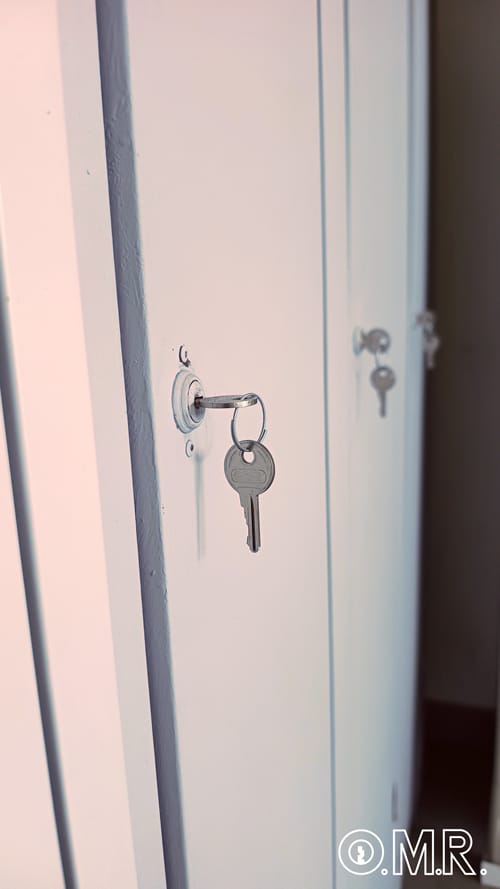
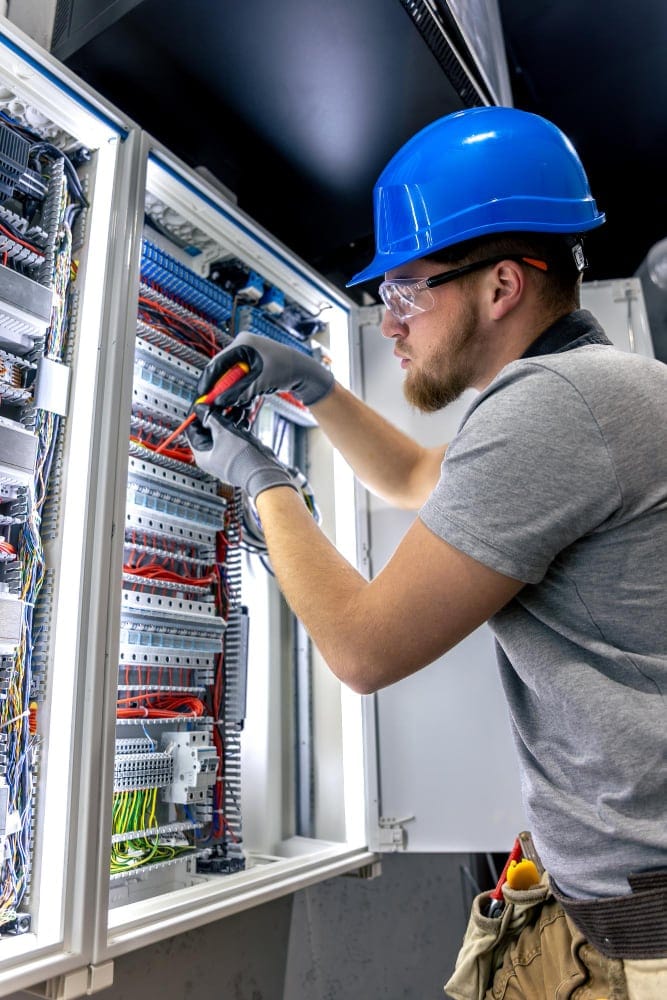
Electrical switchboards and technical panels
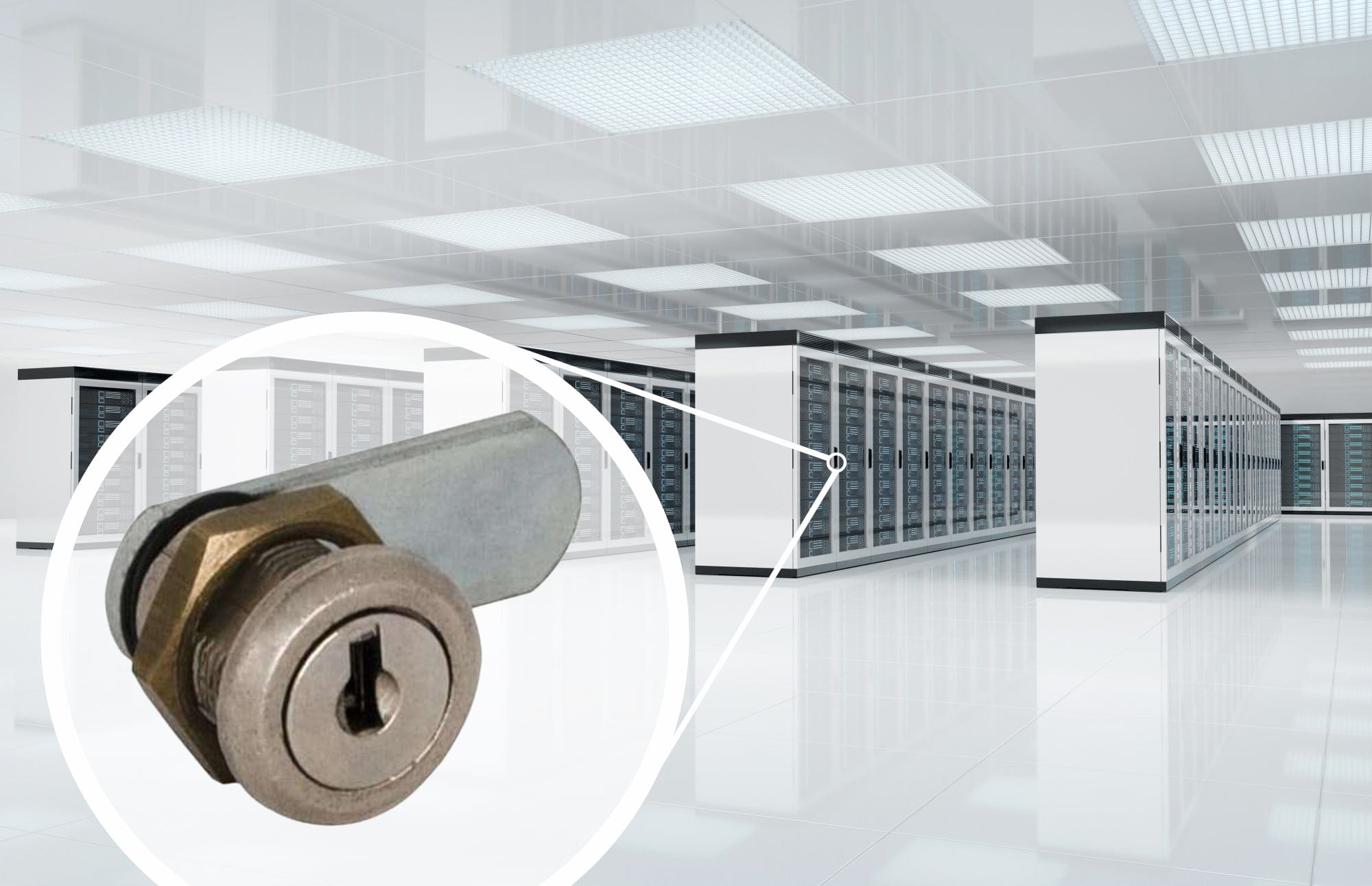
The cam lock-in this application almost always in the 1/4-turn socket key lock version-is the absolute standard for locking LV, MV and HV switchboards, operator panels, HMIs, control cabinets, technical compartments and automation turrets. Its presence is so well established that many panel designers consider it an implicit component of the bill of materials, to be specified only in variants.
The main function is not burglary security but protection against accidental opening: the under-spring compression system ensures that the lock remains closed even if there is vibration, mechanical stress, or accidental pressure on the door. The mechanism is operated only with the correct key or tool-anyone with the right profile (triangular, square, hexagonal) can open, but not those without the tool.
The critical technical specifications for this application:
- Shape: triangular T5 or T6 is the most common on the Italian and European standard. Square Q7 and hexagonal on design specifications. Screwdriver and Double barb - 3 mm Pin for applications where a slightly higher level of access restriction is desired.
- Material: nickel-plated zamak for switchboards in indoor protected environment. STAINLESS STEEL 304 for outdoor installations, saltwater environments, railway, naval, hospital sectors. Technopolymer for applications where weight and color integration with the product are design constraints.
- IP sealing: with the addition of an inner O-ring (OR), IP65 rating can be achieved, which is necessary for switchboards exposed to dust and splashing water.
- Status indicators: some INOX 304 models incorporate visual open/closed indicators-useful on switchboards subject to periodic inspection by technical personnel or inspectors.
- Side vs. front doors: side panelboard doors often require different cam geometries than front doors because of different rebate profiles. OMR has separate product categories for the two cases.
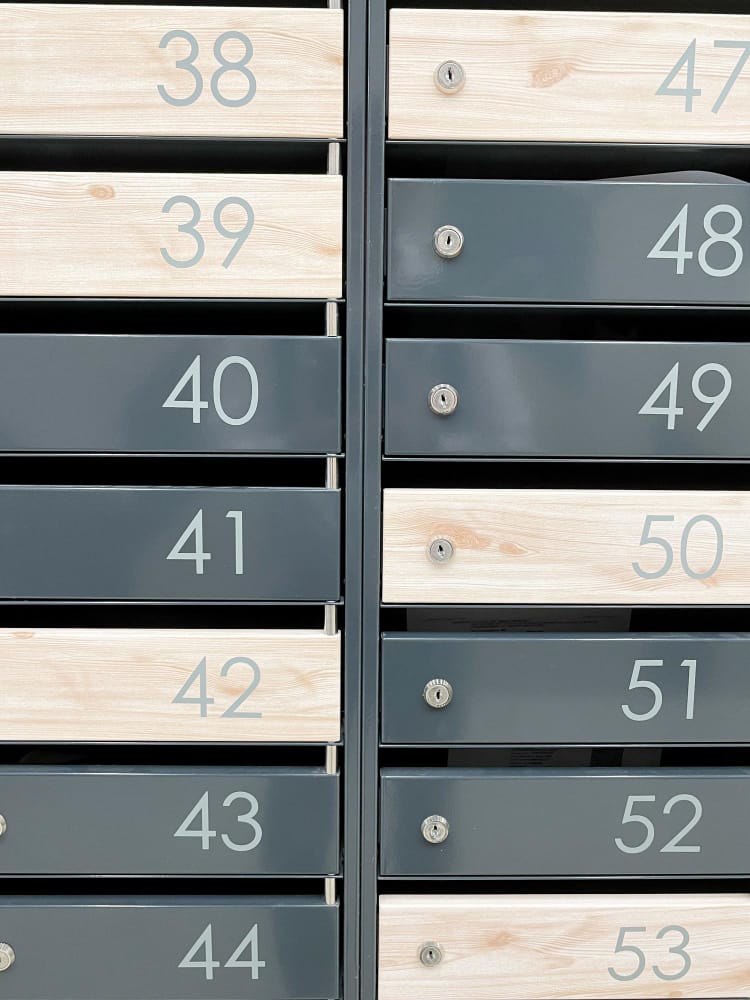
Condominium mailboxes and mailboxes
Mailbox locks are a seemingly simple segment but with definite technical constraints. The context of use-outdoors or semi-outdoors, exposure to rain and dust, use by an unskilled user-defines requirements that not all standard cam locks meet.
The parameters to be defined in specification:
- Mechanism: plate-cylinder mechanism in the standard version, pin tumbler mechanism for mailboxes where controlled key management is a requirement (apartment buildings with an administrator, mailboxes for post offices). The pin tumbler version ensures a higher number of combinations, reducing the risk of interchangeable keys between different boxes in the same filing cabinet.
- Material: steel and brass are the materials best suited to withstand continuous exposure to the elements. The full INOX 304 version is the correct choice for installations in coastal areas or environments with frequent saltiness.
- Door type: hinged or swinging in most cases. Sliding door or cover versions require hook cams or specific geometries.
- Encryption: standard KD (each box has its own key). Managing a master key for the condominium administrator or postal staff requires MK specification when ordering.
For parcel locker and automated distribution systems-where the lock must be operated remotely or by code-OMR offers electronic versions with PIN, RFID and NFC opening compatible with the same installation holes as the mechanical versions.
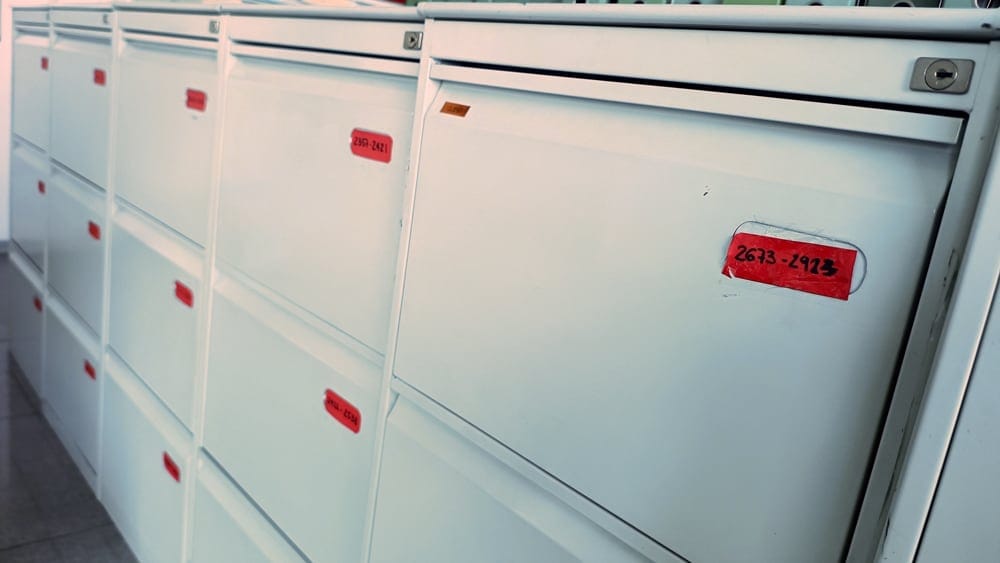
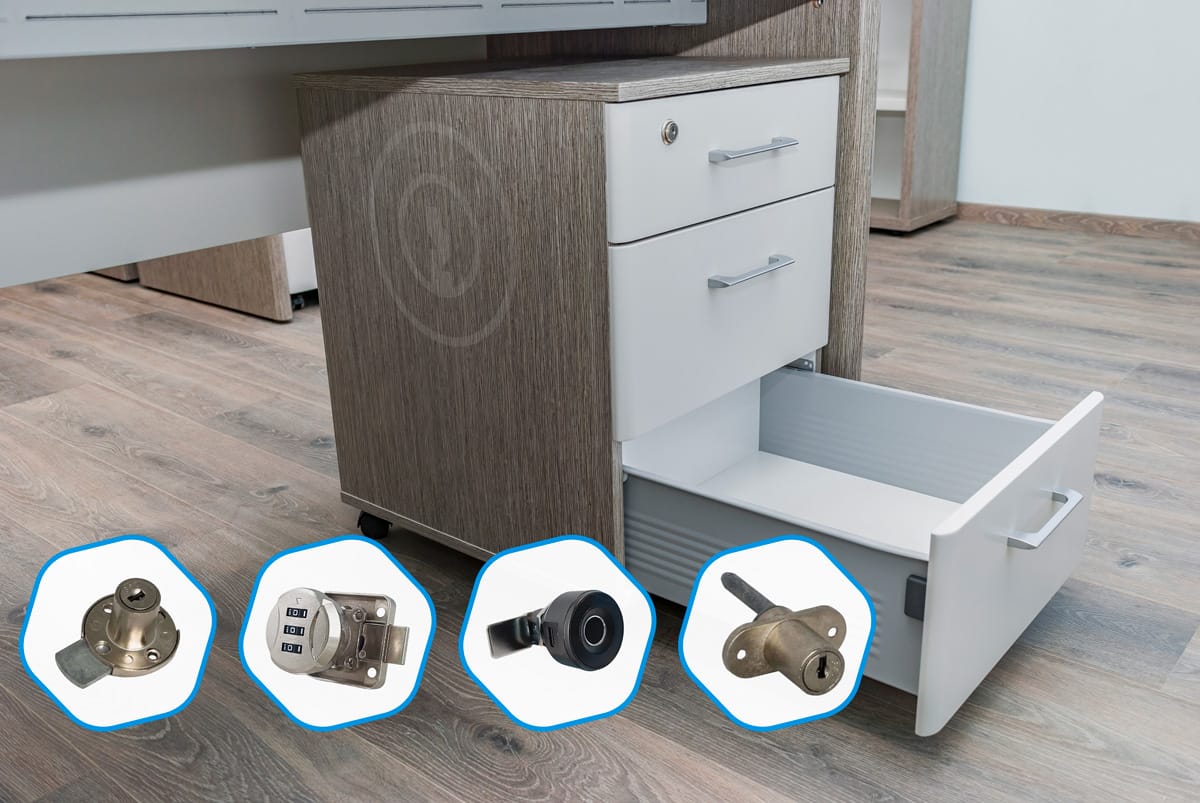
Drawer cabinets, filing cabinets and office furniture
What is special about this application is that the problem is rarely locking a single drawer-the real problem is managing access to a column of drawers with a single key, without having to install and manage a lock for each compartment.
The solution is the actuator-the actuator already described in the section on cam geometries-that allows a single lock to lock centrally all the drawers in the column simultaneously. On a technical level, the actuator is compatible with the standard square terminal, which means that in many cases it can be added to an already installed lock without changing the installation hole.
The relevant specifications for this application:
- Number of drawers: up to 2-3 drawers a standard cam lock may be sufficient. From 3 drawers upward the actuator with translating rods becomes the most practical solution and the one expected by the professional market.
- Cabinet material: metal for office and workshop drawers, wood and MDF for professional and contract furniture. Cylinder lengths vary accordingly.
- Encryption: in contexts where the same drawer model is distributed to many users, KD encryption with MK management allows the company or administrator to maintain a passkey without duplicating individual keys.
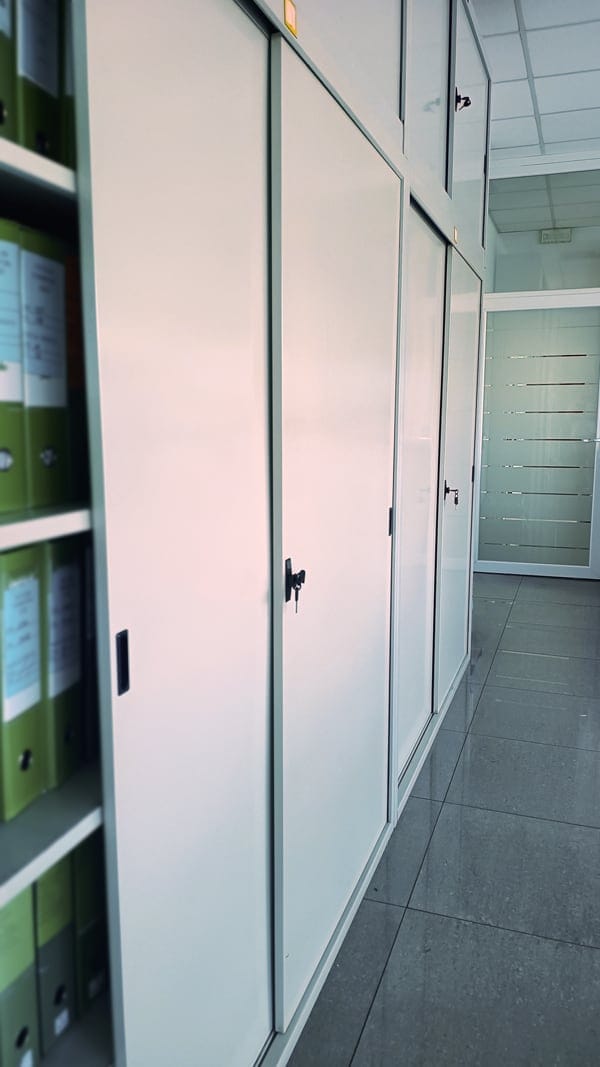
Rolling shutters and sliding doors
Sliding doors and shutters pose a geometric problem that standard cams do not solve: a door that slides sideways cannot be locked with a cam that rotates in the vertical plane-a system is needed to prevent the door from moving sideways.
There are two specific solutions for this application:
Hook cam
The rear hook engages a fixed striker on the cabinet frame, physically preventing the door from sliding. It is the simplest solution for furniture dampers and small sliding doors.
Double hook spring lock
An automatic system where the lock closes with a simple push-no need to turn the key-while opening requires a key. Ideal for professional furniture shutters, contract furniture and any application where locking speed is an operational priority. OMR manufactures this model specifically for sliding doors and shutters.
Button lock
Locking is done by pressing the button, even without a key inserted; opening requires the flat key. Compared with the double spring-loaded hook, it is a more versatile solution: available with through-pin or cam hook, in die-cast metal or technopolymer, with different fastening options (nut, horseshoe clip, screws, quick fastener). Suitable for sliding doors on technical cabinets, office furniture, and professional furniture with high frequency of use.
Mobile lids, lockers and technical compartments
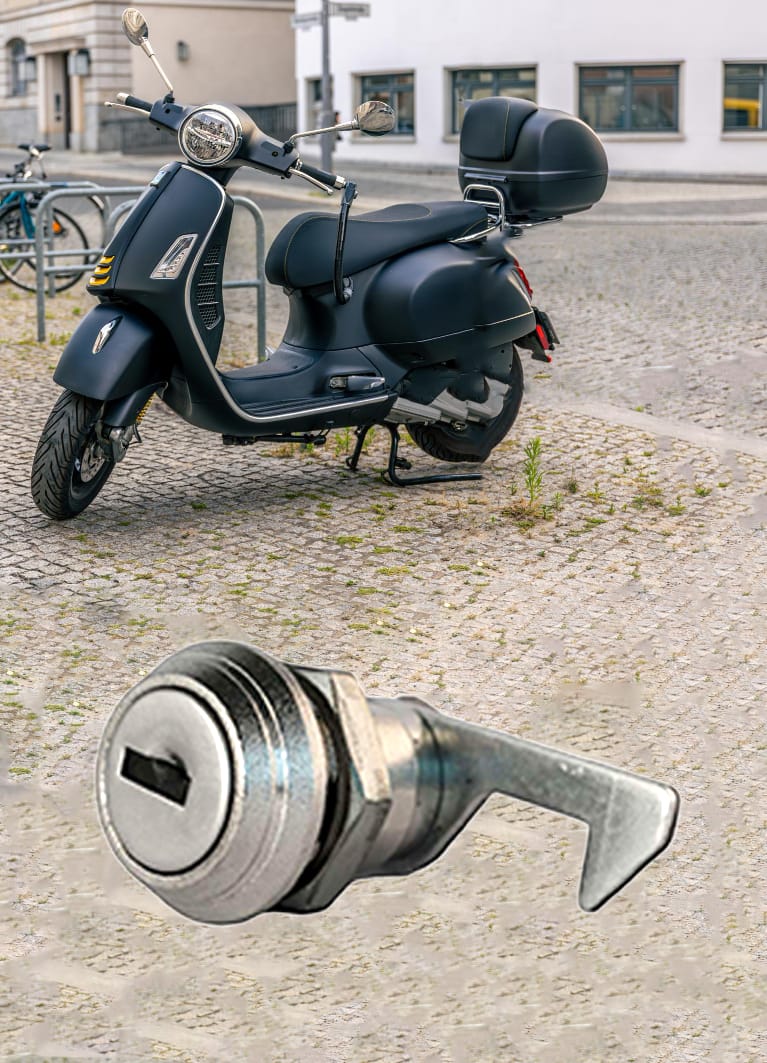
Motorcycle trunks, camper and caravan lockers, tool boxes for vans, sheet metal boxes for construction equipment, technical compartments on special vehicles: this category brings together applications that are very different from each other but share the same basic requirements-installation on thin materials, frequent exposure to the weather, resistance to transport vibrations.
The specifications that guide the choice in this application:
- Material: the version with stainless steel barrels and cap + dust flap is the most popular solution for outdoor applications. INOX 304, or technopolymer versions are recommended for installations in maritime environments or in areas with constant saltiness.
- Fastening: snap spring for thin sheet metal (the norm on top cases and toolboxes), nut or horseshoe clip for thicker thicknesses.
- Vibration resistance: the under-spring compression system-typical of 1/4-turn budget locks-ensures that the lock remains closed even under heavy mechanical stress during transport. Versions with only a straight cam and standard nut are less suitable in this context.
- Encryption: KA is often the preferred choice for corporate vehicle fleets-one key opens all compartments of all vehicles, simplifying operational management.
Finding the right cam lock for your product
Cam locks are standard components, but the right choice depends on a combination of variables-panel material, installation environment, production volume, key management. OMR has been producing and customizing cam locks for more than 60 years, with design and manufacture entirely in Italy and the ability to develop custom solutions for those with non-standard needs.
If you are designing a new product or need to replace your current solution, you have two starting points:
- The catalog: over 80 references of cam locks filterable by key type, mechanism, fastener, material and application. Explore the OMR cam locks catalog →
- The technical team: for custom configurations, large volumes, or off-the-shelf specifications. Contact an OMR consultant →