
Standard keyed
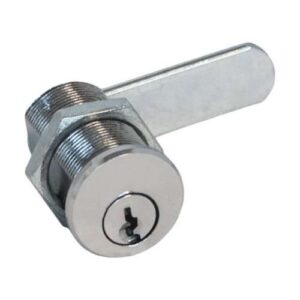
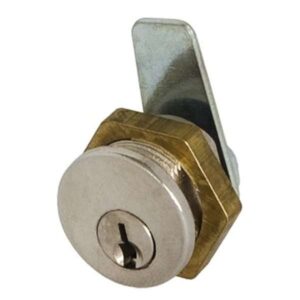
Standard key locks are a reliable and versatile technical solution for locking industrial furniture, technical cabinets, drawer units, and professional furnishings. Designed with a pin tumbler mechanism and a die-cast metal or brass body, they are ideal for universal applications due to the availability of different cams (straight, cranked and hook cams) and nut fastening systems. Keyed different (KD), unique (KA) or passe-partout options allow flexible security management. A 13 mm or 20.2 mm hole diameter, combined with up to 90° clockwise/counterclockwise rotations, ensures compatibility with various industrial locking systems.
Filtra i prodotti
Showing all 2 results
FOCUS
FAQ
What are typical applications of standard key locks?
Standard key locks are mainly used in industrial furniture, professional drawers, technical cabinets, and containment systems for electrical or automation systems. They offer secure locking that can be customized to any design requirement.
What is the difference between keyed alike (KA) and keyed alike (KD)?
Keyed alike (KA) allows multiple locks to be opened with a single key, ideal for shared access environments. Keyed different (KD) provides different keys for each lock, increasing the level of individual security. Both options can be integrated with passe-partout systems.
How to choose the right cam for my application?
The choice of cam depends on the type of movement required and the cabinet configuration: straight, cranked and hook cams are suitable for doors or flaps, while the hook cam offers a more secure hold under vibration or mechanical stress. The orientation and angle of rotation of the lock is also important to consider.