
Locks
OMR Locks produces closures for industrial, commercial, and technical applications. The range covers every need — mechanical, electronic, or hybrid — with variations in size, material, and fastening for any support and installation context.
Product families
Type
Notes
Cam locks
The largest family in the catalog. The rear cam – also called lever or tongue – rotates with the key and holds the door, drawer, or lid; available in dozens of dimensional and fastening variants.
Universal pin locks
Mounted on a standard hole, numerous fastening options and finishes. Versatile for metal, wood, and plastic panels. Pin locks are the premium version of universal locks for materials and design.
Universal wafer locks
Same logic as pin locks, with a wafer mechanism in the rotor (instead of brass pins). Safe, effective, durable: the industrial standard.
Rotary rod locks
Operate a rod system that closes the door at multiple points simultaneously. Suitable for large doors.
Expanding locks
Block access by expanding with a bolt inside the strike hole in the frame post. Known as “cremonese” and in the rotary rod version as “espagnolette”.
Rack locks
The key operates a toothed rack that slides linearly. The standard solution for displays with sliding glass or wood doors. No need to drill the door.
Hook locks
The locking mechanism is a hook that secures to a fixed strike in the frame. Suitable for sliding doors, lids, and hatches.
Deadbolt locks
Closure with a bolt that slides horizontally. Robust solution for swing doors with high sealing requirements.
Padlockable locks
Prepared for closure with an external padlock. Ideal as an entry-level solution in lockers, storage rooms, and high-access areas.
Return spring locks
The rotor automatically returns to the closed position after operation. Useful where accidental forgetfulness needs to be reduced.
Push button locks
Block the sliding of sliding doors through a lock pin that is pushed into the prepared hole of the rear door. Some versions lock by pressing the button even without a key.
Quarter-turn locks
The standard on electrical panels and technical cabinets, these locks are widespread in the industry, rotating 90 degrees and using shaped keys with a triangular, square, hexagonal, 3-wing pin, etc., shape (called imprint).
Pin tumbler key locks
Key shaped like a pin or nail. Simple closure with a low front profile, suitable for recessed installations in posts with little space. High security in little space thanks to the cruciform cylinder.
Removable core locks
These locks allow the internal rotor – also called a plug, cylinder, or barrel – to be removed with a special key. This way, the lock combination can be changed without having to disassemble it.
Reprogrammable locks
The code or combination can be modified without replacing or disassembling the lock. Practical for contexts with variable users.
Combination locks
Opening via a numeric code, without a physical key. Available in mechanical and electronic versions (resettable code at each opening).
Locks with rotating handle
The handle is an integral part of the lock; rotation directly operates the opening and closing mechanism.
Locks with electrical contact
Mechanical key opening with the addition of an electrical contact activated upon closing or opening. For integrations with alarms or automation.
Electronic locks for cabinets
Opening with PIN, Bluetooth, RFID, or HSC. They eliminate the physical key and allow advanced access management. The battery lasts from 5 to 10 years depending on the model. No electrical system required.
Micro locks
Compact versions of the main families, for applications in reduced spaces.
Locks for bins
Designed for recycling bins, often in a gravitational version (automatically unlock during emptying).
Waterproof / stainless locks
Made of stainless steel or with specific treatments for humid, corrosive environments or subject to frequent washing.
OTTO series locks
System for replacing and upgrading the security of old knob locks (rotating knob).
Master key locks
Prepared for master key systems: a master key opens all locks in the system, while other keys only open those assigned.
Custom special locks
For needs not covered by the standard range: dimensions, mechanisms, or materials customized to the client’s specifications.
Handles and knobs
Integrated or combinable handles and knobs, also openable without a key. Complete the installation on doors and panels.
Manufacturing materials
Steel, stainless steel, brass, die-cast metal, technopolymer, technical plastic.
Available fastenings
Nut, screws, quick fastening, riveting, welding, fork.
To find the right product, use the side filters or start from the usage context in the Applications section or from the visual navigation by categories.
Filtra i prodotti
Showing 1–30 of 177 results
-

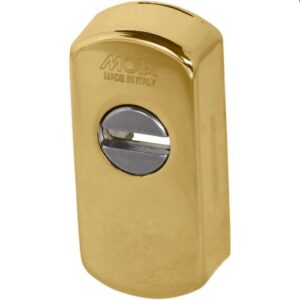
Anti-tear cylinder protection kit
0,00€ -
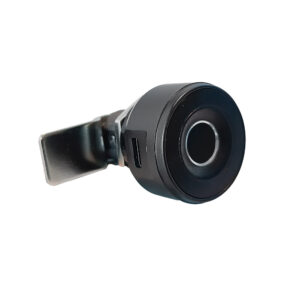
Biometric fingerprint lock – BioLock
-
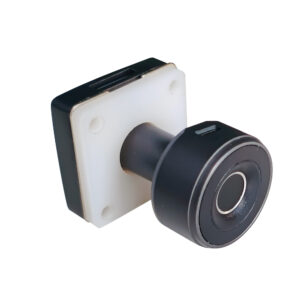
Biometric fingerprint lock for drawers – BioLock Drawers
-
Braze-on cylinder protection for gates
0,00€ -
Budget lock with barrel under spring, quick installation, double barb key
-
Budget lock with barrel under spring, quick installation, screwdriver key
-
Budget lock with barrel under spring, quick installation, square shape (Q7)
-
Budget lock with barrel under spring, quick installation, triangular T6 shape
-
Budget lock with barrel under spring, quick installation, with handle
-
Concealed cam locks for modular panels and platforms
-
Cross key lock for mortise lock
-
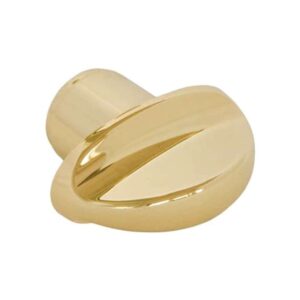
Doorknob
0,00€ -
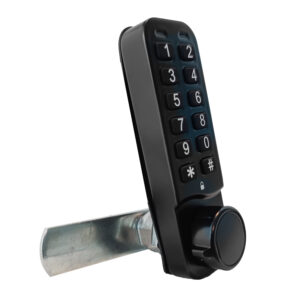
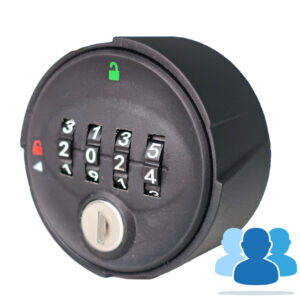
Electronic combination lock
-
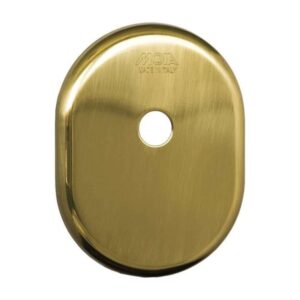
Escutcheon hole shank
0,00€ -
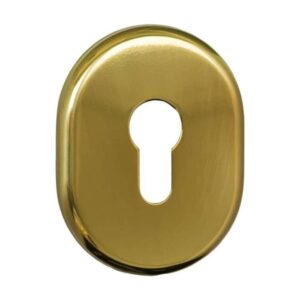
Euro profile escutcheon
0,00€ -
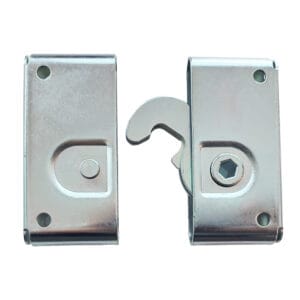
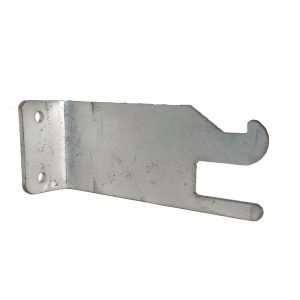
Gravity Lock Hook
-
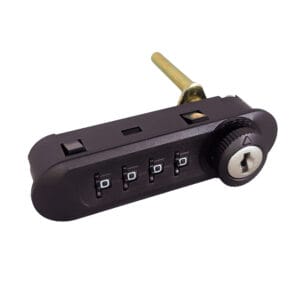
Linear mechanical combination lock with security key
-
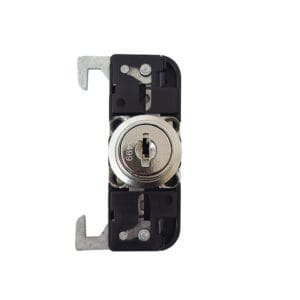
Lock for furniture shutter – key cylinder + side hooks
-
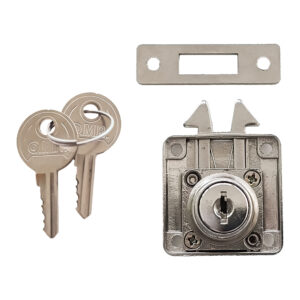
Lock for roller shutters and sliding doors with double spring hooks
-
Manual lock for wastebins – Square 7 key
-
Mechanical combination lock with key – public mode
-
Mechanical combination lock with rear hooked cams
-
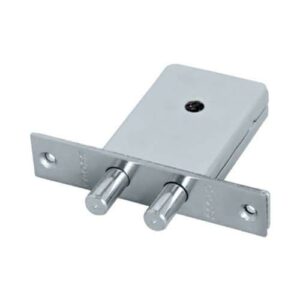
Mechanical combination lock with through-bolt
-
Push-button lock with rear cam
-
Rack and pinion lock with mechanical combination knob
-
Stainless steel double barb – 3 mm Pin budget lock
-
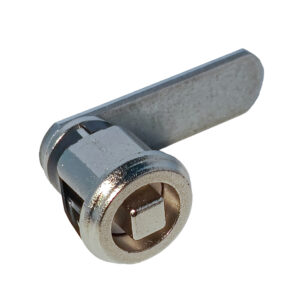
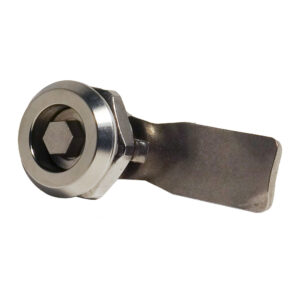
Stainless steel hexagon budget lock
-
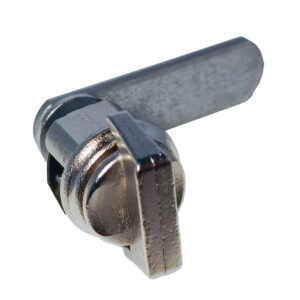
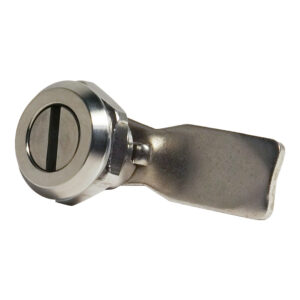
Stainless steel screwdriver budget lock
-
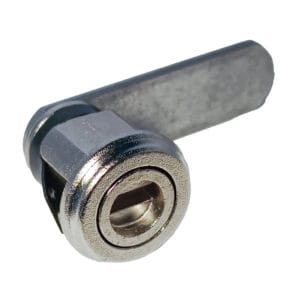
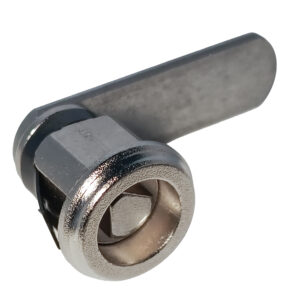
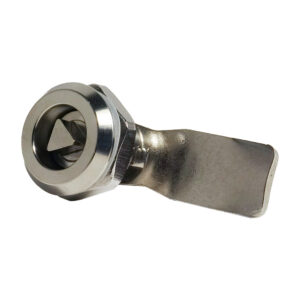
Stainless steel triangle budget key lock
-
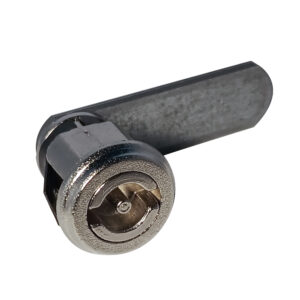
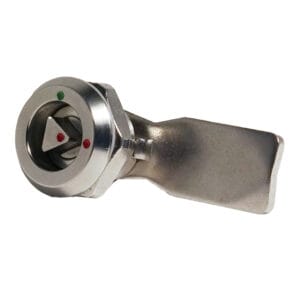
Stainless steel triangle socket key lock – with status indicators


Approfondimento su: Locks
The OMR catalog includes over 160 references: mechanical, electronic, and biometric locks for industrial, commercial, and technical applications of all kinds. With such a wide range, the most effective way to find the right product is to use the filters available in the sidebar.
Start with the type of application. If you already have in mind where you will install the lock — an electrical panel, a drawer, a container, a sliding door — the most direct way is to browse by Applications or by Sectors, where products are already grouped by use context.
Use the filters if you start from the technique. If you already have the specifications in hand, the filters on this page allow you to cross multiple parameters simultaneously:
- Type of lock — the most obvious starting point: cam locks, expansion locks, rotary rod locks, combination locks, electronic locks, and many other families.
- Hole diameter and length — fundamental dimensional parameters to verify compatibility with the panel or door on which you need to mount.
- Key — distinguishes the type of operation: triangular or square imprint, encrypted key, numeric combination, Bluetooth/RFID/HSC, fingerprint, and others.
- Where it is mounted — filter by physical destination: hinged doors, sliding doors, drawers, lids, panels, shutters.
- Locking mechanism — useful when the project requires a certain type of closure: bolt, rack, rotary rods, latch, hook lever, and so on.
- Fastening — nut, screws, quick fastening, riveting, welding, or fork.
- Manufacturing material — steel, stainless steel, brass, technopolymer, and others, relevant for environments with corrosion or temperature resistance requirements.
- Support material — metal, wood/MDF, plastic, glass: helps to exclude products not compatible with the panel on which it is mounted.
The filters are cumulative: you can select more than one to refine the results. To reset the selection, use the Reset button.
Don't know where to start? The visual navigation by categories offers a guided path through images, useful when the technical name of the product is not yet clear. For any questions, the OMR sales team is reachable by phone or email — contacts are at the bottom of each page.
Domande frequenti su: Locks
What is the difference between a cam lock and a rotary rod lock?
The cam lock acts on a single rear lever or cam, suitable for closing single doors with a single anchoring point. The rotary rod lock, on the other hand, controls a system of rods that extend in multiple directions, ensuring multiple simultaneous locking points: it is the typical solution for large doors, industrial cabinets, or panels that require sealing on multiple sides.
What does "coded key" mean and how does it differ from an imprint key?
An imprint key (triangular, square, hexagonal, etc.) has a recognizable standardized profile: anyone with the correct format key can operate the lock. A coded key, however, is unique: the code engraved on the key and the rotor is specific to that single lock or a defined set of master-keyed locks. It therefore offers a significantly higher level of access control.
What is master keying and when is it useful?
Master keying is the configuration of multiple locks to respond to a hierarchical key system: a master key can open all locks in the system, while lower-level keys open only those assigned. It is the ideal solution for companies, vehicle fleets, lockers, or any context where differentiated access needs to be managed with a single structured key set. OMR offers a dedicated master keying service.
How do I choose between a mechanical and an electronic lock?
Mechanical locks do not require power, are robust, simple to install, and suitable for the vast majority of industrial and commercial applications. Electronic locks — with PIN, Bluetooth, RFID, or HSC — are indicated when access traceability, advanced access management, and the elimination of physical keys are needed. OMR also produces hybrid locks with electrical contact, which maintain mechanical key operation but activate an electrical signal upon opening.
How do you read the product sheet to understand if a lock is compatible with my panel?
The main parameters to check are the required drilling hole diameter, the length of the lock body (which must be compatible with the panel thickness), and the type of fastening. On the website, you can filter by diameter, length, and support material already on the category page, and each product sheet provides detailed measurements with a downloadable technical drawing.
Does OMR produce custom locks?
Yes. For needs not covered by the standard range — particular dimensions, specific mechanisms, special materials, or aesthetic customizations — OMR creates special custom locks. The "Custom Special Locks" category in the catalog contains some examples, but the recommended starting point is to contact the sales team directly for a technical evaluation.
Which locks are suitable for humid environments or contact with chemical agents?
For these contexts, OMR offers a range of waterproof and stainless locks, made of stainless steel or with specific finishing treatments. They are designed to withstand washing, salt spray, prolonged humidity, and, in some cases, exposure to industrial detergents. The "Manufacturing Material → Stainless" filter on the category page is the quickest way to view these references.